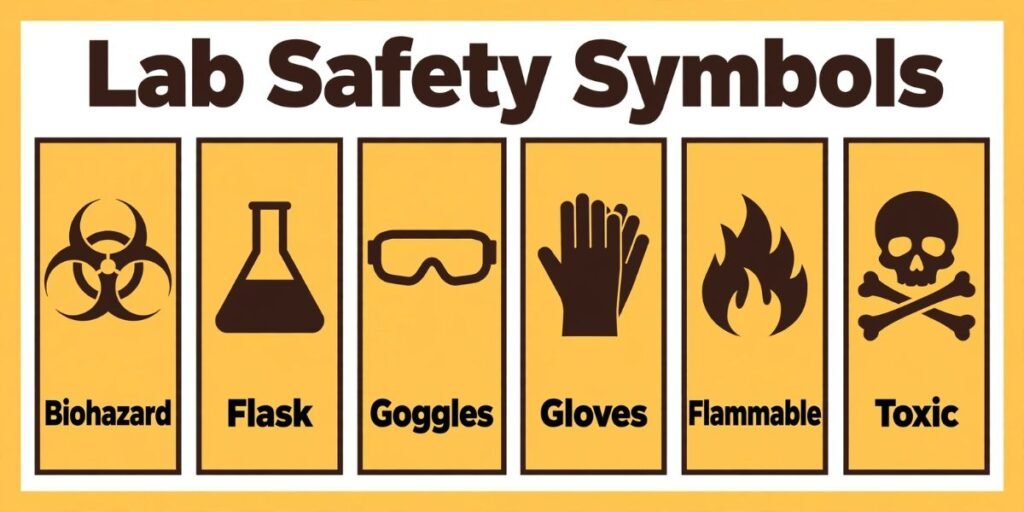
What do the signs on the laboratory doors, chemical bottles and equipment signify? Lab safety symbols aid people in identifying hazards prior to an accident. They are illustrated with easy to understand pictures and warning signs to indicate risks that aren’t always visible. A symbol may alert you to the presence of toxic chemicals, fire, broken glass, radioactivity or infectious materials.
These signs are a crucial element to understanding working safely in a school laboratory, hospital, research facility or science workplace.A quick message is given with each symbol, but depending on the hazard, the meaning of the sign will varied.
Certain symbols are based on international chemical labelling conventions and others are used to indicate special laboratory hazards. The distinction is important for students and workers to make, as it helps them make safe choices.
This pamphlet covers common laboratory safety symbols, their meanings, where they may be found and what to do if you see one of the symbols. This background information can be used to go into the lab more equipped, and to put everyone in the laboratory around you in some measure at ease.
Lab Safety Symbols For Chemical Hazards
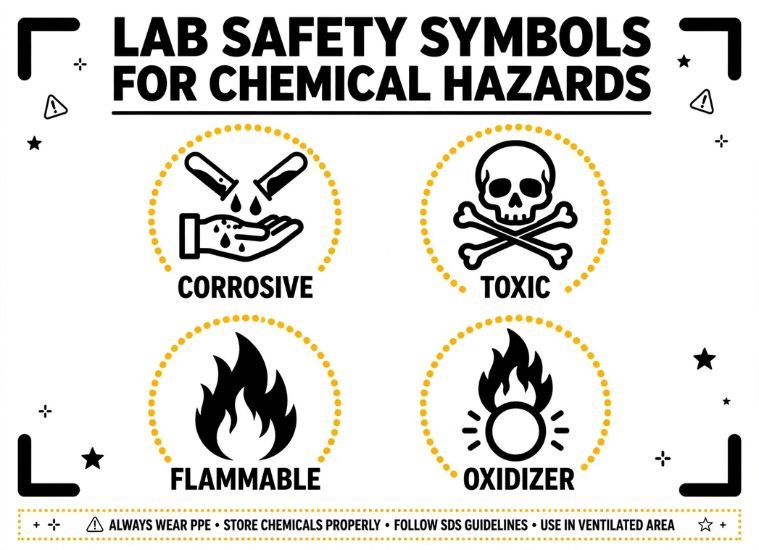
Lab Safety Symbols For Chemical Hazards help people identify dangerous substances in a laboratory. These signs warn about possible risks from touching, inhaling, or accidentally swallowing chemicals. Different chemicals can cause irritation, burns, poisoning, or other serious health effects.
Recognizing hazard labels helps workers understand the precautions required before handling materials. Protective equipment, such as gloves, goggles, and lab coats, may be necessary.
Always read the chemical label and safety data sheet before using an unfamiliar substance. Following laboratory procedures helps reduce exposure and prevent avoidable accidents. These symbols also help students and laboratory staff recognize potential dangers before starting an experiment. Understanding each warning can support safer decisions when handling, transferring, or disposing of chemicals.
| Icon | Symbol | Meaning | Origin | Description |
| 🏷️ | HMIS Label | Health, flammability and physical hazard ratings | American Coatings Association (HMIS III) | A color-coded bar label with a 0 to 4 rating, plus a PPE letter code, for workplace containers. |
| ⚠️ | WHMIS Pictograms | Canadian hazard classes | Canada’s Workplace Hazardous Materials Information System | GHS-aligned symbols used on Canadian chemical labels and safety data sheets. |
| 👞 | Closed-Toe Shoes Required | Foot protection from spills | ISO 7010 (M008) and lab dress codes | A blue mandatory sign showing protective footwear. |
| 🧰 | Chemical Spill Kit Sign | Location of spill response supplies | OSHA HAZWOPER guidance | A marker for a kit with absorbents, neutralizers and disposal bags. |
| 🧪 | Workplace Container Label | Identifies secondary containers | OSHA HazCom Standard | A label naming contents and hazards on bottles refilled from original containers. |
Learn about the historical meanings and cultural heritage behind German Symbols heritage and how they reflect German traditions, identity, history, and national culture.
Lab Safety Symbols For Biological Hazards
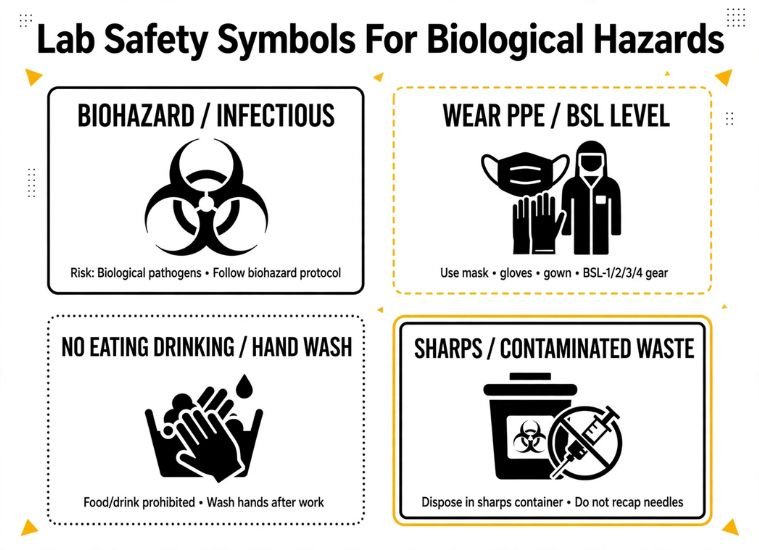
Lab Safety Symbols For Biological Hazards warn people about materials that may contain harmful biological agents. These hazards can include certain bacteria, viruses, fungi, and potentially infectious samples. The biohazard symbol is commonly displayed on containers, laboratory equipment, and restricted work areas.
Recognizing this warning reminds workers to follow approved handling and containment procedures. Suitable protective equipment and proper hygiene help reduce the risk of exposure.
Biological waste must be collected and disposed of according to laboratory rules. Following these precautions helps protect laboratory staff, visitors, and the surrounding environment.
Workers should avoid touching their faces or personal belongings while handling potentially contaminated materials. Proper cleaning and disinfection procedures are also important after completing laboratory tasks.
| Icon | Symbol | Meaning | Origin | Description |
| ☣️ | Biohazard Entry Placard | Lab-door agent information | CDC/NIH BMBL | A door sign listing the biosafety level, agents in use and emergency contacts. |
| 🌀 | Centrifuge Safety Cup Label | Aerosol containment | Biosafety practice | A tag on sealed buckets that contain aerosols if a tube breaks. |
| 💨 | Aerosol-Generating Procedure Warning | Airborne particle risk | Biosafety practice | A caution for work such as vortexing, sonication or pipetting that creates aerosols. |
| ❄️ | Biohazard Freezer Label | Stored infectious samples | Laboratory biosafety practice | A biohazard-marked label on freezers and refrigerators holding specimens. |
| 🩸 | Bloodborne Pathogens Exposure Notice | Exposure control plan | OSHA 29 CFR 1910.1030 | A posted notice on exposure procedures and post-exposure follow-up. |
Learn about the historical meanings and traditions behind Military Symbols emblems and how they represent service, honor, courage, and duty.
Lab Safety Symbols For Fire Prevention
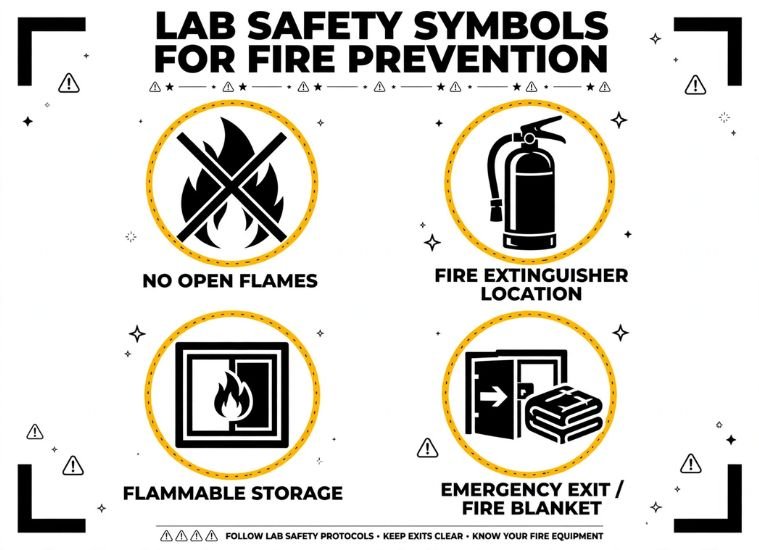
Lab Safety Symbols For Fire Prevention identify fire risks and provide important safety information. They may warn about ignition sources, flammable materials, hot surfaces, or areas where smoking is prohibited. Other signs show the location of fire extinguishers, alarms, emergency exits, and fire blankets.
Understanding these symbols helps laboratory users recognize hazards before beginning their work. Flammable materials should be kept away from sparks, open flames, and unsuitable heat sources.
Emergency equipment and exit routes should remain accessible at all times. Following fire safety procedures can help prevent injuries and limit damage to laboratory facilities. Staff should know how to raise the alarm and leave the building safely during an emergency. Regular safety training can help everyone respond calmly and correctly if a fire occurs.
| Icon | Symbol | Meaning | Origin | Description |
| 🔺 | Fire Triangle Diagram | Heat, fuel and oxygen | Fire science education | A triangle showing the three elements a fire needs. Removing one puts it out. |
| 🧯 | PASS Technique Sign | Pull, Aim, Squeeze, Sweep | U.S. Fire Administration training | A step diagram posted near extinguishers. |
| 📋 | Extinguisher Inspection Tag | Maintenance record | NFPA 10 | A tag recording monthly checks and annual servicing. |
| 🚪 | Fire-Rated Door Label | Time rating of a door | NFPA 80 and UL listing | A metal label stating how many minutes a door resists fire. |
| 🏃 | Keep Exit Clear Sign | Unobstructed escape path | OSHA 29 CFR 1910.37 | A sign banning storage in front of exits and corridors. |
Explore the meanings and cultural significance behind Symbols For Family bonds and how they represent love, loyalty, unity, and lasting connections between family members.
Lab Safety Symbols For Chemical Storage
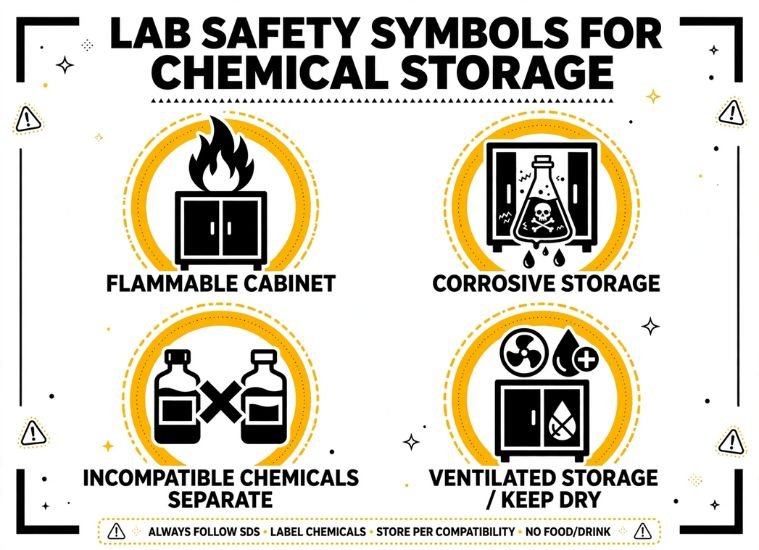
Lab Safety Symbols For Chemical Storage help workers recognize hazards associated with stored chemicals. Labels may identify substances that are flammable, corrosive, toxic, reactive, or dangerous to health.
These warnings help staff select suitable storage areas and avoid placing incompatible chemicals together. Chemical containers should remain properly closed, clearly labeled, and in suitable condition. Some substances require special cabinets, temperature controls, ventilation, or protection from moisture.
Always follow the manufacturer’s instructions and the laboratory’s chemical storage procedures. Correct storage reduces the risk of leaks, unwanted reactions, fires, and accidental exposure.
Containers should be checked regularly for damage, leaks, or missing labels. Chemicals must also be kept away from unauthorized users and stored according to the risks they present.
| Icon | Symbol | Meaning | Origin | Description |
| 💧 | Desiccator Storage Label | Keep dry | Laboratory practice | A label for moisture-sensitive chemicals kept with desiccant. |
| 🫧 | Inert Atmosphere Storage Label | Store under nitrogen or argon | Laboratory practice | A tag for air-sensitive reagents in sealed or glovebox storage. |
| 🗄️ | Hazard Class Shelf Label | Groups chemicals by hazard | Laboratory chemical hygiene plans | A shelf marker such as “Acids” or “Oxidizers” for segregation. |
| 🔖 | Barcode Inventory Tag | Digital tracking | Laboratory management practice | A scannable label linking a container to its inventory record. |
| 🔒 | Self-Closing Door Label | Keeps cabinets shut | NFPA 30 | A label on flammable cabinets with doors that close automatically. |
Explore the meanings and cultural significance behind Symbols Of Hope signs and how they represent optimism, renewal, resilience, and brighter possibilities for the future.
Lab Safety Symbols For Toxic Substances
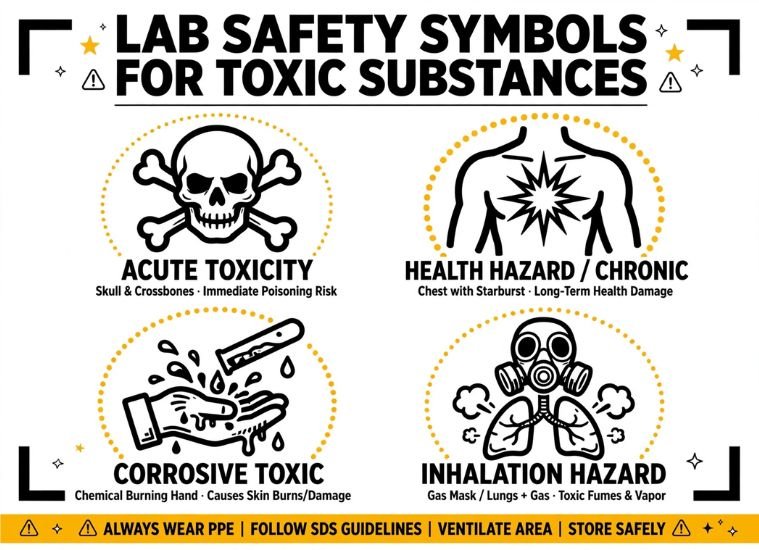
Lab Safety Symbols For Toxic Substances warn that exposure to certain chemicals may cause poisoning or serious harm. The skull-and-crossbones pictogram is commonly used for chemicals that meet specific acute toxicity criteria.
Other health hazard symbols may indicate different serious effects, depending on the substance. Exposure can occur through swallowing, inhalation, or contact with the skin.
Workers should read the label and safety data sheet before handling a toxic material. Appropriate protective equipment and ventilation depend on the chemical and the task. If exposure occurs, follow the laboratory emergency procedure and seek medical assistance when needed.
Toxic substances should be handled only by people who understand the required safety precautions. Keeping containers sealed and clearly labeled can also help prevent accidental contact or misuse.
| Icon | Symbol | Meaning | Origin | Description |
| ☠️ | Acute Toxicity Category Label | Severity of short-term poisoning | UN GHS (Categories 1 to 5) | A label showing how dangerous a single exposure is, with Category 1 the most toxic. |
| 🧬 | STOT Label | Specific target organ toxicity | UN GHS | A hazard class marking harm to organs such as the liver, kidneys or nervous system. |
| 🫁 | Aspiration Hazard Label | Danger if liquid enters the lungs | UN GHS | A health-hazard pictogram for liquids that can cause chemical pneumonia if swallowed and inhaled. |
| 📛 | Exposure Monitoring Badge | Measures personal exposure | OSHA and NIOSH industrial hygiene | A clip-on badge or sampler worn to record chemical exposure over a shift. |
| 🌫️ | Fume Hood Only Sign | Toxic vapor control | Laboratory practice (ANSI/AIHA Z9.5) | A sign requiring toxic chemicals to be handled inside a working hood. |
Explore the meanings and cultural traditions behind Halloween Symbols customs and how they connect to spooky folklore, seasonal celebrations, mystery, and remembrance.
Lab Safety Symbols For Corrosive Materials
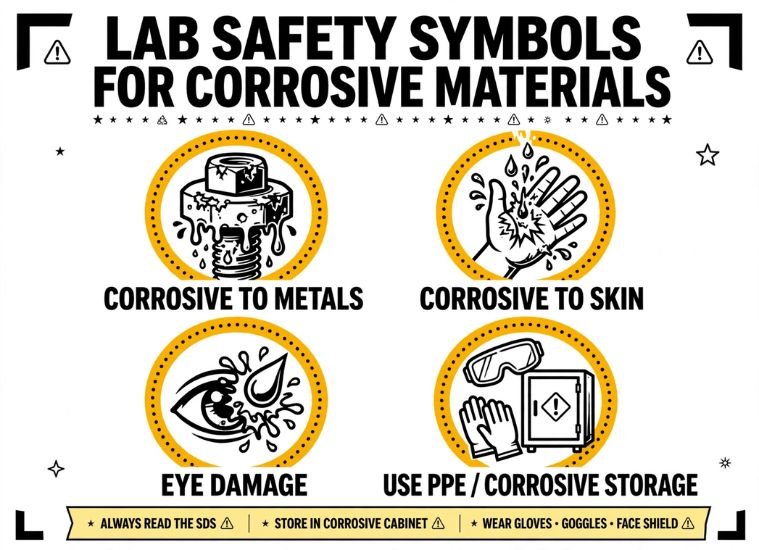
Lab Safety Symbols For Corrosive Materials identify substances that can damage skin, eyes, or certain metals. The common corrosion pictogram shows liquid damaging a hand and a metal surface.
Strong acids and bases are examples of materials that may present corrosive hazards. These substances can cause severe burns or eye injuries if handled incorrectly.
Wear the protective equipment specified by the label and laboratory procedures. Use suitable containers and follow approved methods for transferring and storing corrosive chemicals.
In case of a spill or contact, follow the relevant emergency instructions immediately. Never handle corrosive materials without understanding their specific risks and required precautions. Keeping eyewash stations and emergency washing facilities accessible is also important when working with these substances.
| Icon | Symbol | Meaning | Origin | Description |
| 🧴 | Glacial Acetic Acid Label | Corrosive and flammable acid | OSHA HazCom and GHS | A label combining corrosion and flame pictograms. |
| 🖐️ | Phenol Burn Warning | Corrosive and toxic through skin | University EHS programs | A sign for phenol, which can numb skin while causing deep damage. |
| 🧼 | Sodium Hypochlorite Label | Corrosive bleach solution | OSHA HazCom and GHS | A label warning against mixing bleach with acids or ammonia. |
| 🗑️ | Corrosive Waste Label | Waste with extreme pH | U.S. EPA RCRA (code D002) | A hazardous waste tag for liquids with a very low or very high pH. |
| 🍶 | Acid Bottle Carrier Label | Safe transport of bottles | Laboratory practice | A marking on rubber or polyethylene carriers that contain leaks and breakage. |
Explore the mythology and historical significance behind Ares Symbols mythology and how they represent war, strength, courage, and the power of the Greek god Ares.
Lab Safety Symbols For Flammable Liquids
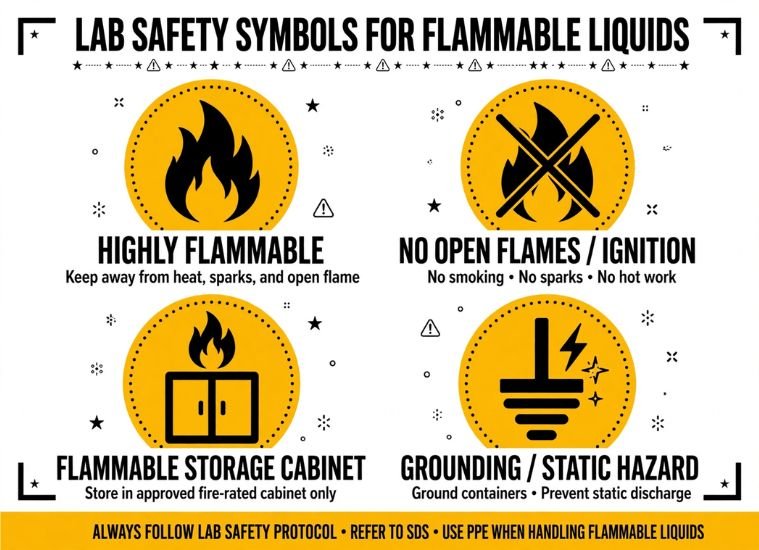
Lab Safety Symbols For Flammable Liquids warn that certain liquids can ignite when exposed to an ignition source. The flame pictogram is commonly used on labels for chemicals that meet flammability criteria. Examples may include some solvents, alcohols, and laboratory cleaning products.
Vapors from flammable liquids can also create fire risks, especially in poorly ventilated areas. Keep these substances away from open flames, sparks, and other unsuitable ignition sources.
Store them in approved containers and designated areas according to laboratory rules. Always check the label and safety data sheet for the correct handling precautions. Use suitable ventilation when required to reduce the buildup of flammable vapors. Close containers after use and clean up spills only by following the approved laboratory procedure.
| Icon | Symbol | Meaning | Origin | Description |
| 🔥 | Ethyl Acetate Hazard Label | Highly flammable solvent | GHS and OSHA HazCom | A label with a flame pictogram for a common solvent in chromatography and extraction. |
| 🧪 | Tetrahydrofuran (THF) Warning | Flammable, forms peroxides | GHS and university EHS programs | A label warning of fire risk and the need to date containers and test for peroxides. |
| 🫙 | Xylene Hazard Label | Flammable, harmful vapors | GHS and OSHA HazCom | A label for a solvent used in histology and cleaning, with flame and health pictograms. |
| 🔌 | Grounded Funnel Label | Prevents static during pouring | NFPA 77 and NFPA 30 | A tag on metal funnels bonded to containers to stop static sparks. |
| ♨️ | Heating Mantle Only Sign | No open flames under solvents | Laboratory practice | A caution to heat flammable liquids with mantles or baths, never a burner. |
Lab Safety Symbols For Explosive Materials
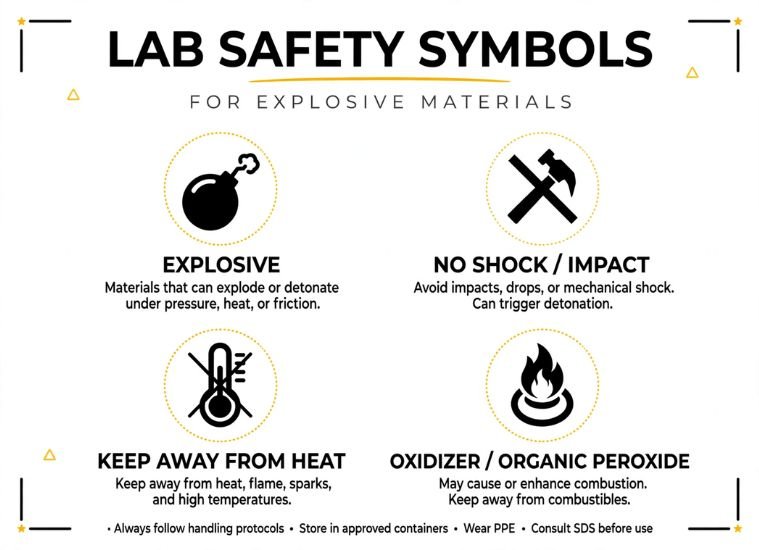
Lab Safety Symbols For Explosive Materials warn about substances or products that may explode under certain conditions. The exploding-bomb pictogram is used for specific explosive hazards under chemical classification systems. Some materials may react dangerously to heat, shock, friction, or other triggering conditions.
Recognizing the warning helps laboratory staff understand that special controls may be required. Only trained and authorized personnel should handle materials that require specialized procedures. Follow the approved storage, handling, and emergency instructions for the specific substance.
Never experiment with an unknown material or ignore an explosive hazard label. Keep unauthorized people away from areas where explosive hazards are present. If a suspicious or unstable material is found, do not touch it and notify the responsible safety personnel.
| Icon | Symbol | Meaning | Origin | Description |
| 💥 | Perchlorate Hazard Warning | Explosive when dry or heated with organics | University EHS practice and NFPA 45 | A label for perchlorate salts and acid that can form shock-sensitive residues. |
| 🎛️ | Remote Handling Required Sign | Keep distance during hazardous steps | Explosives safety practice | A sign requiring remote controls or barriers for high-risk reactions. |
| 💧 | Nitrocellulose Wetting Label | Keep damp to stay stable | OSHA and UN Class 1 and 4 guidance | A tag reminding users that dry nitrocellulose is flammable and explosive. |
| ⚡ | Metal Fulminate Warning | Extremely sensitive explosive compounds | Chemical safety practice | A sign for compounds such as mercury fulminate that detonate from slight shock. |
| ⚖️ | Reaction Scale-Up Limit Sign | Restrict batch size | Laboratory risk assessment practice | A notice setting the maximum quantity allowed before safety review. |
Lab Safety Symbols For Compressed Gas Cylinders
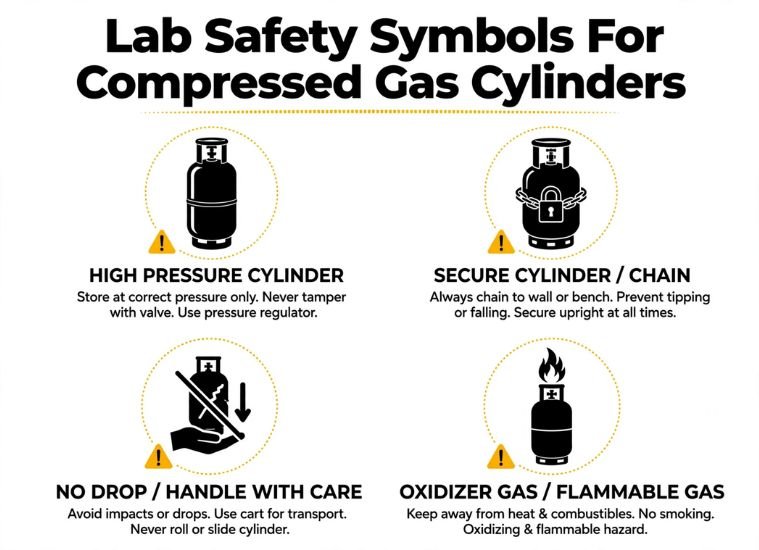
Lab Safety Symbols For Compressed Gas Cylinders identify gases stored under pressure and related hazards. The gas cylinder pictogram is used for gases under pressure in relevant chemical labeling systems.
A damaged cylinder or valve can create serious physical risks, even when the gas itself is not toxic. Depending on the gas, additional hazards may include fire, poisoning, or oxygen displacement.
Cylinders should be secured upright when required and protected from heat and physical damage. Use suitable regulators and follow the supplier’s instructions for connection and handling.
Check the cylinder label before use and follow laboratory procedures for leaks or emergencies. Never move a cylinder by dragging it or lifting it by its valve or regulator. Keep protective valve caps in place during transport when required by the cylinder design and safety procedures.
| Icon | Symbol | Meaning | Origin | Description |
| 🎈 | Helium Cylinder Label | Inert gas, asphyxiation risk | CGA and OSHA | A label for a light gas used in cryogenics and gas chromatography. |
| 🫧 | Carbon Dioxide Cylinder Label | Asphyxiant, cold on release | CGA and OSHA | A label warning of oxygen displacement and frostbite from expanding gas. |
| ☠️ | Chlorine Cylinder Warning | Toxic and corrosive gas | CGA and OSHA | A label combining toxic and oxidizing pictograms for a lung-damaging gas. |
| 🚨 | Cylinder Leak Emergency Sign | Evacuate and ventilate | CGA P-1 and lab emergency plans | A posted procedure for leaking cylinders, including who to call. |
| 🧊 | Cryogenic Liquid Cylinder Label | Super-cold liquid gas | CGA and NFPA 55 | A label for liquid nitrogen or argon cylinders with relief valves and burn risk. |
Lab Safety Symbols For Electrical Equipment
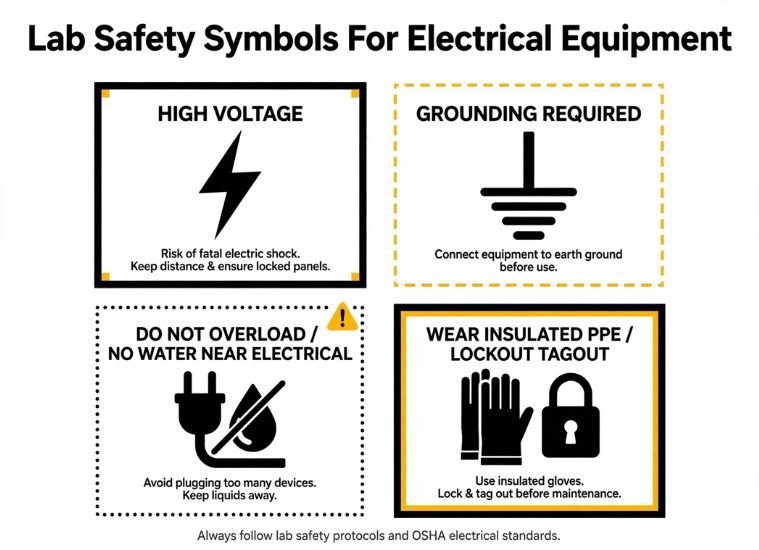
Lab Safety Symbols For Electrical Equipment warn users about possible electrical hazards. Signs may identify high voltage, electric shock risks, or equipment that requires restricted access.
Damaged cables, wet surfaces, and faulty connections can increase the risk of injury. Before using laboratory equipment, check for visible damage and follow the operating instructions. Keep electrical devices away from liquids unless they are designed for that environment.
Repairs and electrical maintenance should be carried out by qualified personnel. If equipment appears unsafe, stop using it and report the problem according to laboratory procedures. Never touch exposed wires or attempt to repair energized equipment yourself. Proper grounding, routine inspections, and correct use of equipment help reduce electrical risks.
| Icon | Symbol | Meaning | Origin | Description |
| 🏷️ | PAT Test Tag | Portable appliance tested | UK IET Code of Practice (also used worldwide) | A tag recording the date of the last electrical safety inspection. |
| 🔋 | Surge Protector Label | Protects equipment from voltage spikes | UL 1449 | A rating label showing joule capacity and suppression level. |
| 🖐️ | ESD Sensitive Device Symbol | Static can damage components | ANSI/ESD S20.20 and IEC 61340 | A hand in a triangle with a slash, marking static-sensitive items. |
| 🚱 | Keep Liquids Away From Electrical Equipment Sign | Spill and shock prevention | Laboratory practice | A caution to keep beakers and bottles away from power outlets and devices. |
| 🚪 | Electrical Equipment Room Sign | Restricted service space | NFPA 70 | A door sign for rooms housing panels and transformers. |
Lab Safety Symbols For Glassware Handling
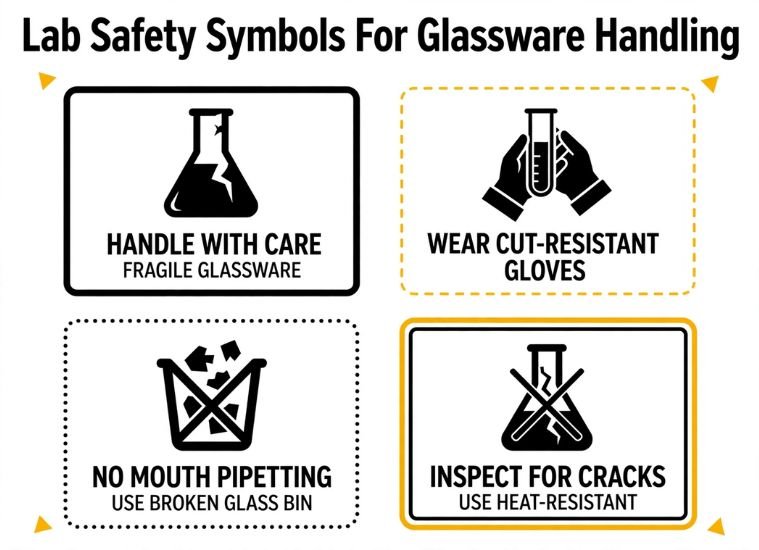
Lab Safety Symbols For Glassware Handling remind laboratory users that glass equipment can break and cause injuries. Beakers, test tubes, flasks, and glass pipettes should be inspected before use.
Cracked, chipped, or damaged glassware should not be used for laboratory work. Handle hot glass carefully because it can look cool even when it remains dangerously hot. Use suitable tools and protective equipment when working with fragile or heated items. Broken glass must be collected with the approved tools and placed in the correct disposal container.
Never pick up broken glass with bare hands or dispose of it in ordinary waste unless laboratory rules specifically allow it. Keep glassware away from the edges of benches to reduce the chance of accidental falls. Use appropriate racks and holders when carrying or storing fragile laboratory equipment.
| Icon | Symbol | Meaning | Origin | Description |
| 🧪 | Separatory Funnel Venting Reminder | Release pressure while shaking | Organic chemistry lab practice | A caution to invert and open the stopcock often during extractions. |
| 🔬 | Ampoule Opening Warning | Sharp glass and pressure release | Laboratory practice | A sign for using a protective sleeve or opener when breaking ampoules. |
| 🌀 | Rotary Evaporator Flask Clip Label | Secures flask during spinning | Laboratory equipment practice | A reminder to fasten clips and check for cracks before running. |
| 🫧 | Boiling Chips Reminder | Prevents bumping and splashing | Laboratory practice | A label for adding boiling chips to liquids before heating. |
| 🏗️ | Clamp and Ring Stand Support Sign | Stable apparatus setup | Laboratory practice | A reminder to clamp glassware securely and keep stands balanced. |
How To Follow Lab Safety Symbols Correctly
Use these steps whenever you notice a safety symbol:
- Stop and read: Check the sign, container label, and relevant instructions before starting work.
- Identify the risk: Work out whether the warning concerns chemicals, biological materials, equipment, or another hazard.
- Check the SDS: For hazardous chemicals, consult the Safety Data Sheet for handling, storage, first aid, and emergency guidance.
- Use suitable protection: Wear the gloves, eye protection, clothing, or other equipment required by your procedure.
- Ask when unsure: Contact a teacher, supervisor, or laboratory safety officer instead of guessing.
If a warning sign is missing, damaged, or unclear, report it. Do not handle an unknown substance or operate unfamiliar equipment until you have received proper guidance.
Conclusion: Lab Safety Symbols
What would be the first step towards a safer laboratory? One of the first steps is to be able to identify the signs that you see around you. Lab safety symbols alert you to potential hazards including fire, hazardous chemicals, infectious substances, radiation and hazardous equipment.
Every sign contains an informative message which can be used to help prevent injury.However, a symbol cannot be a substitute for instruction or explicit directions. Use appropriate protective equipment, read chemical labels and, if necessary, consult safety data sheets, and follow safety practices of your laboratory.
Don’t take action unless you understand a sign or hazard; ask a trained supervisor. The following measures will help students and laboratory personnel protect themselves and others from exposure to hazardous substances:
Always review signs before beginning an experiment or equipment use. By using some simple information and prudent selection, you can assist in maintaining a safer, cleaner and more prepared laboratory.
Frequently Asked Questions About Lab Safety Symbols
Q1: What are Lab Safety Symbols?
A1: Lab Safety Symbols are visual signs used in laboratories to identify hazards, communicate safety rules, and help people handle chemicals, equipment, and biological materials safely.
Q2: What do Lab Safety Symbols mean?
A2: Lab Safety Symbols communicate different risks, including flammable substances, toxic chemicals, corrosive materials, electrical hazards, and biological dangers.
Q3: Why are Lab Safety Symbols important?
A3: Lab Safety Symbols help prevent accidents, reduce exposure to hazardous materials, protect laboratory workers and students, and encourage safe working practices.
Q4: How can I identify Lab Safety Symbols correctly?
A4: Learn the meaning of each symbol, read its accompanying warning label, and follow the laboratory’s safety instructions before handling any equipment or substance.