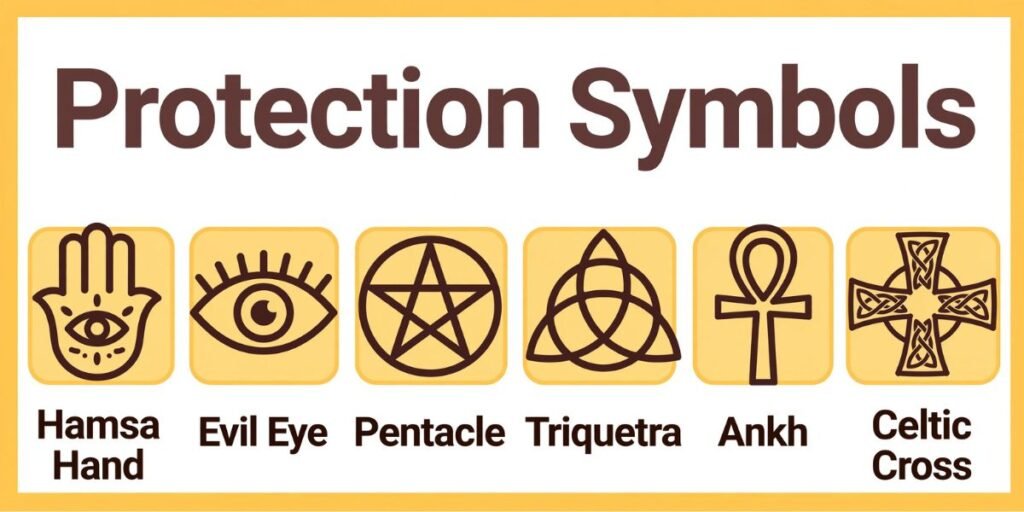
Have you ever wondered why people wear symbols for protection? Why do some homes display special signs above the door or keep protective charms nearby? Are these symbols simply cultural traditions, or do they carry a deeper meaning? Protection symbols have been used for thousands of years in different cultures, religions, and spiritual traditions.
Many people believe these symbols represent safety, strength, good fortune, and protection from harm or negative energy. Others value them as reminders of faith, courage, hope, or personal beliefs. Today, protection symbols appear in jewelry, artwork, tattoos, homes, and places of worship around the world.
Each symbol has its own history and meaning, making it unique to the culture that created it. Learning about these symbols helps us better understand their cultural importance and the stories behind them. This guide explains the most well-known protection symbols, their meanings, and why they continue to be recognized across different traditions.
Why Are Protection Symbols Important?
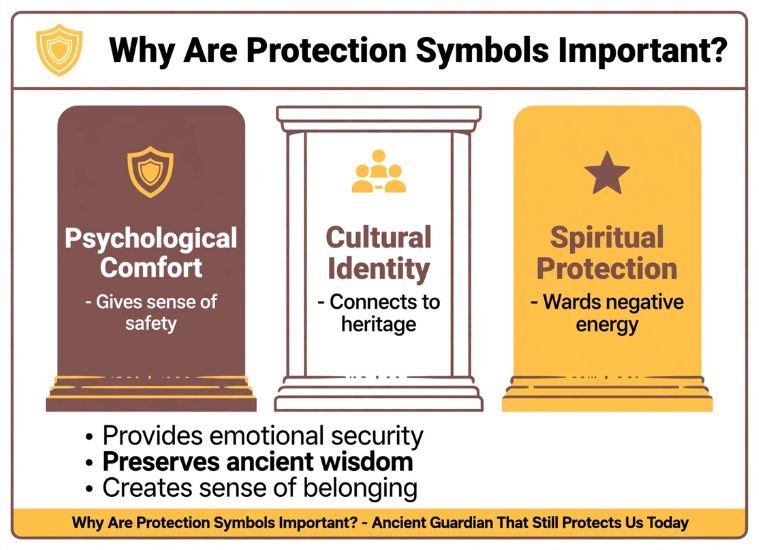
Protection symbols have been part of human history for thousands of years. Different cultures created these symbols to represent safety, strength, faith, courage, and hope during difficult times. While their meanings vary from one tradition to another, many people view them as reminders of protection, resilience, and positive values.
Today, protection symbols can be found in homes, places of worship, jewelry, artwork, clothing, and personal accessories. Some are connected to religious beliefs, while others are part of cultural traditions or historical customs. Learning about these symbols helps us understand the beliefs and heritage of people around the world.
Protection Symbols
Search a protection symbol to learn what it represents.
Hamsa Hand
Explore the traditions and cultural ideas connected to Christmas symbols interpretation and learn how these familiar designs have become part of seasonal celebrations.
Protection Symbols and Meanings
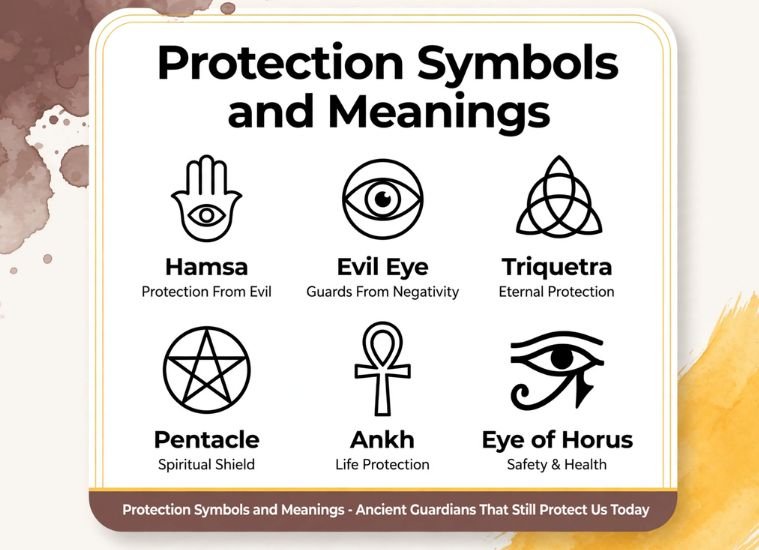
Protection symbols appear in many cultures and belief systems. Some represent divine protection, while others symbolize courage, healing, wisdom, or spiritual guidance. Although interpretations differ, these symbols continue to hold cultural and historical importance.
| Protection Symbol | Description | Meaning |
| Evil Eye | Blue eye-shaped symbol | Protection from envy and harmful intentions |
| Hamsa | Open hand with an eye | Protection, blessings, and good fortune |
| Cross | Christian cross | Faith, hope, and spiritual protection |
| Eye of Horus | Ancient Egyptian eye | Health, protection, and wisdom |
| Celtic Shield Knot | Interwoven knot | Strength, unity, and protection |
| Tree of Life | Tree with spreading branches and roots | Growth, balance, and resilience |
| Dreamcatcher | Woven hoop with feathers | Cultural symbol associated with filtering dreams in some Indigenous traditions |
| Ankh | Ancient Egyptian cross | Life and spiritual continuity |
| Triquetra | Three interlocking loops | Unity and eternity |
| Pentacle | Five-pointed star within a circle | Protection and balance in some traditions |
| Saint Benedict Medal | Christian medal | Prayer and faith |
| Nazar Boncuğu | Turkish blue eye charm | Protection from the evil eye |
| Aegishjalmur | Icelandic magical stave | Courage and protection in Norse tradition |
| Om Symbol | Sacred Sanskrit symbol | Spiritual peace and harmony |
| Lotus Flower | Blooming lotus | Purity, renewal, and inner strength |
Explore the qualities and ideas associated with symbols of strength significance and learn how these designs can reflect courage, resilience, and inner power.
Evil Eye Symbol Meaning
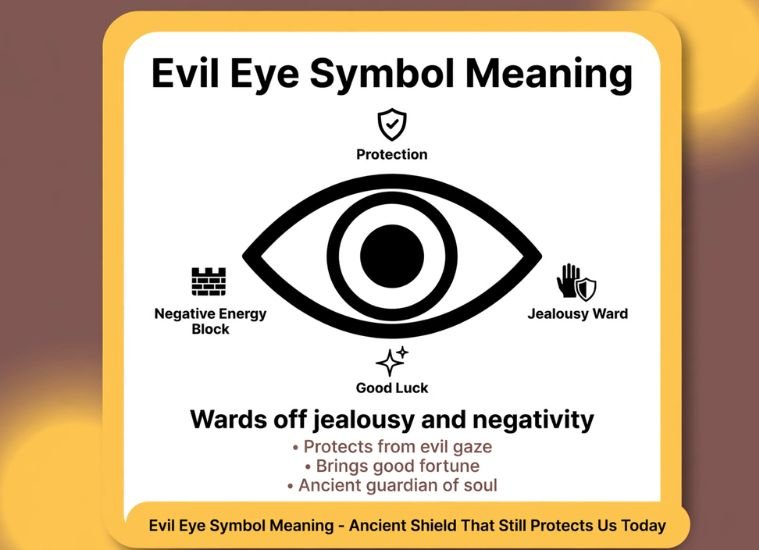
The Evil Eye is one of the most recognized protection symbols in many cultures. It is usually shown as a blue eye-shaped design and has been used for centuries in parts of the Mediterranean, the Middle East, South Asia, and other regions. In many traditions, it represents protection from envy, jealousy, or harmful intentions.
Today, the Evil Eye appears on bracelets, necklaces, keychains, home decorations, and other personal items. For many people, it is also a symbol of awareness and positive intentions.
| Symbol | Description | Meaning |
| Evil Eye | An eye-shaped symbol found in many cultures as a protective emblem. | Represents protection from envy, harmful intentions, and misfortune. |
| Blue Evil Eye | A blue eye-shaped charm commonly used as an amulet. | Represents protection, peace, and warding off negative intentions. |
| Nazar | A traditional blue-and-white eye-shaped amulet. | Represents protection from the evil eye and jealousy. |
| Evil Eye Bead | A small bead designed with concentric eye-like colors. | Represents spiritual protection and safety. |
| Evil Eye Bracelet | A bracelet featuring an evil eye charm. | Represents protection and a reminder to stay guarded against negativity. |
| Evil Eye Necklace | A necklace featuring an eye-shaped pendant. | Represents personal protection and good fortune. |
| Evil Eye Hand Charm | A protective hand design combined with an eye. | Represents protection, awareness, and defense against harm. |
| Evil Eye Amulet | A charm traditionally carried or displayed for protection. | Represents protection from misfortune and harmful attention. |
| Evil Eye Wall Hanging | An eye symbol displayed inside a home. | Represents protection of the household from negative influences. |
| Evil Eye Pendant | An eye-shaped ornament worn as jewelry. | Represents personal safety, protection, and awareness. |
| Evil Eye Ring | A ring decorated with an eye symbol. | Represents protection and vigilance. |
| Evil Eye Beaded Charm | A decorative bead with an eye pattern. | Represents protection against jealousy and unwanted attention. |
| Evil Eye Circle | A circular design featuring an eye at its center. | Represents watchfulness, protection, and awareness. |
| Evil Eye Keychain | A small protective eye charm attached to keys or belongings. | Represents everyday protection and good fortune. |
| Evil Eye Ornament | A decorative eye symbol placed in homes or personal spaces. | Represents protection and positive intentions. |
| Evil Eye Amulet Chain | A chain decorated with several eye charms. | Represents continued protection and vigilance. |
| Evil Eye Home Symbol | An eye displayed near an entrance or inside a home. | Represents protection of the home and its occupants. |
| Evil Eye Jewelry | Jewelry incorporating the protective eye design. | Represents protection, awareness, and cultural tradition. |
| Evil Eye Charm | A small eye-shaped protective object. | Represents safety, protection, and defense against negative attention. |
| Evil Eye | The evil eye as a traditional protective symbol. | Represents protection from envy, harmful intentions, misfortune, and negative attention. |
Explore the faith, history, and visual elements connected to Catholic symbols traditions and learn how these designs have become meaningful parts of religious practice.
Hamsa Symbol Meaning
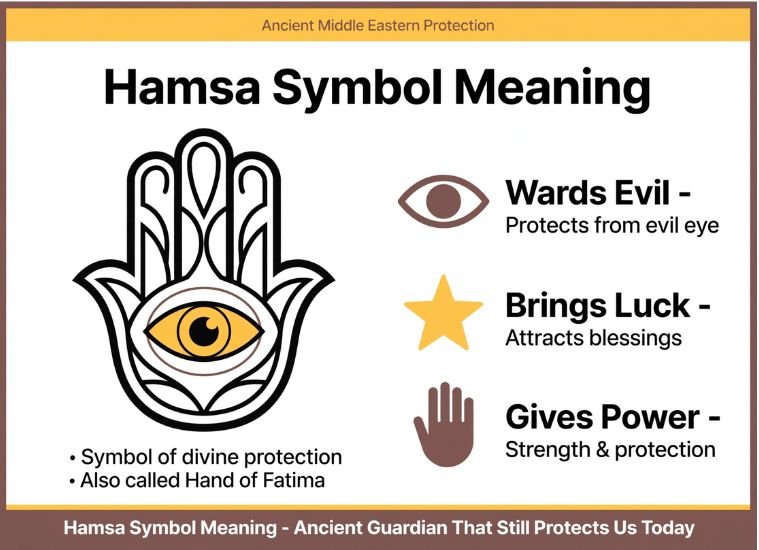
The Hamsa is a hand-shaped symbol that has been used in different cultures and religions for centuries. It often features an eye in the center of the palm and is associated with protection, blessings, strength, and good fortune. Depending on the tradition, its meaning and use may vary.
Today, the Hamsa is commonly seen in jewelry, wall decorations, artwork, and decorative items.
| Symbol | Description | Meaning |
| Hamsa Hand | A hand-shaped symbol with an open palm. | Represents protection, blessings, and safety. |
| Hamsa with Eye | A Hamsa containing an eye in its center. | Represents protection, awareness, and guarding against the evil eye. |
| Open Hamsa | A hand shown with fingers spread apart. | Represents protection, peace, and strength. |
| Hamsa Pendant | A hand-shaped pendant worn as jewelry. | Represents personal protection and blessings. |
| Hamsa Bracelet | A bracelet featuring a Hamsa charm. | Represents protection and good fortune. |
| Hamsa Necklace | A necklace carrying a Hamsa pendant. | Represents safety, blessings, and spiritual protection. |
| Hamsa Ring | A ring decorated with a Hamsa design. | Represents protection and positive intentions. |
| Hamsa Amulet | A Hamsa carried or displayed as a protective charm. | Represents protection from harm and misfortune. |
| Hamsa Wall Hanging | A Hamsa displayed inside a home. | Represents protection and blessings for the household. |
| Hamsa with Blue Eye | A blue Hamsa featuring an eye. | Represents protection, peace, and awareness. |
| Hamsa Hand Charm | A small Hamsa used as an everyday charm. | Represents safety, protection, and blessings. |
| Hamsa Keychain | A Hamsa attached to keys or personal belongings. | Represents everyday protection and good fortune. |
| Hamsa Ornament | A decorative Hamsa used in homes or personal spaces. | Represents peace, blessings, and protection. |
| Hamsa Circle | A Hamsa enclosed within a circular design. | Represents unity, protection, and completeness. |
| Hamsa with Flowers | A Hamsa decorated with floral patterns. | Represents protection, beauty, growth, and blessings. |
| Hamsa with Heart | A Hamsa combined with a heart. | Represents protection, kindness, and positive intentions. |
| Hamsa Emblem | A stylized Hamsa used as an emblem. | Represents protection, strength, and blessings. |
| Hamsa Hand of Protection | A Hamsa specifically presented as a protective symbol. | Represents safety, defense, and spiritual protection. |
| Hamsa Hand of Blessing | A Hamsa associated with blessings and goodwill. | Represents peace, prosperity, and positive energy. |
| Hamsa | The Hamsa as a traditional symbol across several cultures and faith traditions. | Represents protection, blessings, peace, strength, and safety. |
Explore the characters, stories, and visual elements connected to Star Wars symbols history and learn how these designs have become recognizable parts of the galaxy.
Cross Symbol Meaning
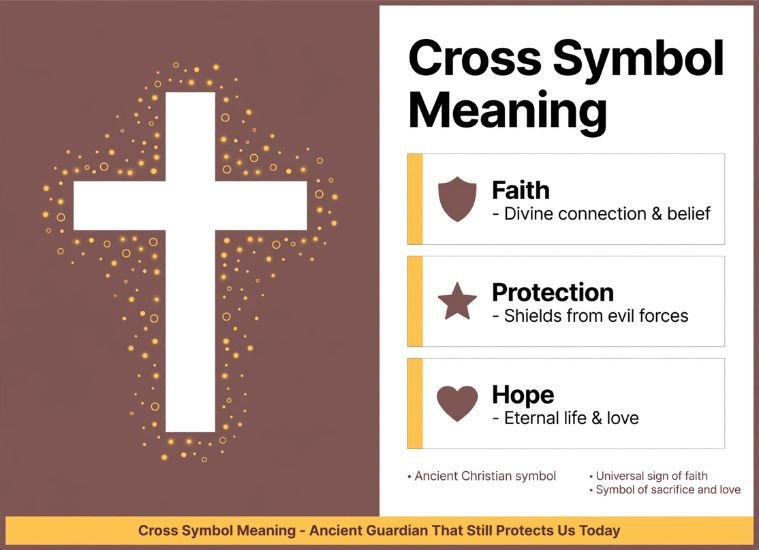
The Cross is one of the most recognized symbols in Christianity. It represents the life, death, and resurrection of Jesus Christ and is a reminder of faith, hope, and God’s love. For Christians, the Cross is a spiritual symbol that reflects salvation and trust in God.
The Cross appears in churches, homes, schools, jewelry, and places of worship around the world.
| Symbol | Description | Meaning |
| Cross | A figure formed by two intersecting lines. | Represents Christianity, faith, sacrifice, and salvation. |
| Latin Cross | A cross with a longer vertical section below the intersection. | Represents the crucifixion and Christian faith. |
| Greek Cross | A cross with four arms of equal length. | Represents Christianity and faith. |
| Celtic Cross | A cross traditionally featuring a circle around the intersection. | Represents Christian faith alongside Celtic artistic tradition. |
| Jerusalem Cross | A large cross surrounded by four smaller crosses. | Represents Christianity and the spread of the Christian faith. |
| Orthodox Cross | A cross associated with Eastern Christian traditions. | Represents Christian faith and the crucifixion of Jesus. |
| Crucifix | A cross showing the body of Jesus Christ. | Represents Christ’s sacrifice and crucifixion. |
| Cross Pendant | A cross worn as jewelry. | Represents personal Christian faith and devotion. |
| Cross Necklace | A necklace featuring a cross pendant. | Represents faith, devotion, and Christian identity. |
| Cross Bracelet | A bracelet decorated with a cross. | Represents faith and a reminder of Christian teachings. |
| Cross Ring | A ring featuring a cross design. | Represents Christian belief and devotion. |
| Cross and Crown | A cross combined with a crown. | Represents Christ’s kingship, victory, and faith. |
| Cross and Dove | A cross combined with a dove. | Represents Christian faith, peace, and the Holy Spirit. |
| Cross and Heart | A cross combined with a heart. | Represents faith, devotion, and Christian love. |
| Cross Shield | A cross displayed on a shield. | Represents faith, protection, and spiritual courage. |
| Cross Emblem | A cross used as a symbolic emblem. | Represents Christianity, faith, and hope. |
| Cross on Tombstone | A cross displayed on a grave marker. | Represents Christian faith and hope in eternal life. |
| Cross with Rays | A cross surrounded by rays of light. | Represents hope, divine light, and faith. |
| Simple Cross | A plain cross without additional decoration. | Represents Christian faith, sacrifice, and salvation. |
| Cross | The cross as the central symbol of Christianity. | Represents the crucifixion of Jesus, sacrifice, salvation, faith, and hope. |
Eye Of Horus Symbol Meaning
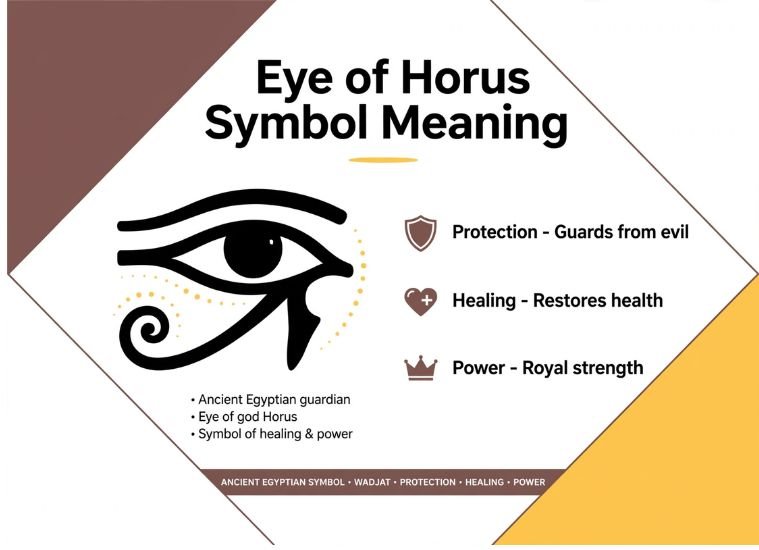
The Eye of Horus is an ancient Egyptian symbol that represents protection, health, healing, and wisdom. It is connected with the god Horus in Egyptian mythology and has appeared in artwork, architecture, and jewelry for thousands of years.
Today, the Eye of Horus is widely recognized as an important symbol from ancient Egyptian culture.
| Symbol | Description | Meaning |
| Eye of Horus | An ancient Egyptian symbol resembling a stylized human eye. | Represents protection, healing, restoration, and well-being. |
| Right Eye of Horus | The right eye traditionally associated with Horus. | Represents solar associations, order, and protection in Egyptian symbolism. |
| Left Eye of Horus | The left eye traditionally associated with Horus. | Represents lunar associations, healing, and restoration. |
| Eye of Horus Amulet | A protective charm featuring the symbol. | Represents protection, health, and safety. |
| Eye of Horus Pendant | A necklace pendant featuring the ancient symbol. | Represents protection and well-being. |
| Eye of Horus Necklace | A necklace decorated with the symbol. | Represents protection, awareness, and ancient Egyptian heritage. |
| Eye of Horus Bracelet | A bracelet featuring the symbol. | Represents personal protection and good fortune. |
| Eye of Horus Ring | A ring decorated with the symbol. | Represents protection and connection with ancient Egyptian symbolism. |
| Eye of Horus Wall Symbol | The symbol displayed as home decoration. | Represents protection and guardianship. |
| Eye of Horus Charm | A small charm bearing the eye design. | Represents protection and well-being. |
| Eye of Horus with Wings | The eye combined with wing imagery. | Represents protection, freedom, and divine associations. |
| Eye of Horus with Ankh | The eye paired with the Egyptian ankh. | Represents protection, life, and well-being. |
| Eye of Horus Scarab | The eye combined with a scarab design. | Represents protection, renewal, and Egyptian tradition. |
| Eye of Horus Papyrus | The symbol shown in ancient Egyptian-style artwork. | Represents Egyptian history, protection, and spiritual tradition. |
| Eye of Horus Gold Symbol | The eye represented in gold. | Represents value, protection, and ancient royal associations. |
| Eye of Horus Blue Symbol | The eye shown in blue. | Represents protection, peace, and spiritual symbolism. |
| Eye of Horus Emblem | A stylized version used as an emblem. | Represents protection, awareness, and restoration. |
| Eye of Horus Guardian | The symbol presented as a protective guardian. | Represents safety, watchfulness, and protection. |
| Eye of Horus Amulet Charm | A traditional protective form of the symbol. | Represents health, protection, and restoration. |
| Eye of Horus | The ancient Egyptian symbol associated with Horus. | Represents protection, healing, restoration, well-being, and watchfulness. |
Celtic Shield Knot Symbol Meaning
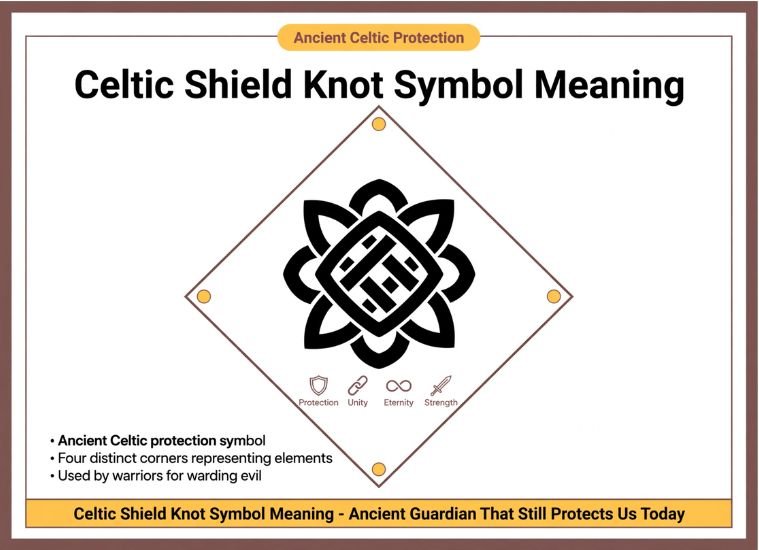
The Celtic Shield Knot is a traditional Celtic design made with interwoven lines that have no clear beginning or end. It has long been associated with protection, strength, unity, and loyalty in Celtic art and folklore.
The symbol is commonly found in jewelry, carvings, decorative artwork, and traditional Celtic designs.
| Symbol | Description | Meaning |
| Celtic Shield Knot | An interwoven Celtic knot traditionally associated with protection. | Represents protection, strength, and continuity. |
| Shield Knot | A symmetrical knot enclosed in a protective form. | Represents defense, safety, and resilience. |
| Four-Sided Celtic Knot | A knot arranged around four connected sides. | Represents balance, stability, and protection. |
| Interwoven Shield Knot | A knot made from continuous interlacing lines. | Represents unity, connection, and endurance. |
| Celtic Knot Shield | A shield-shaped design containing Celtic knotwork. | Represents protection, strength, and heritage. |
| Endless Shield Knot | A knot with lines that appear to have no beginning or end. | Represents continuity, eternity, and lasting strength. |
| Celtic Protection Knot | A knot specifically used as a protective design. | Represents safety, resilience, and defense. |
| Celtic Warrior Knot | Knotwork associated with warrior-themed designs. | Represents courage, strength, and protection. |
| Celtic Shield Emblem | A shield containing Celtic patterns. | Represents defense, heritage, and resilience. |
| Celtic Knot Pendant | A pendant featuring interwoven knotwork. | Represents continuity, protection, and connection. |
| Celtic Shield Necklace | A necklace featuring a shield knot. | Represents protection, strength, and cultural heritage. |
| Celtic Shield Bracelet | A bracelet decorated with shield knotwork. | Represents protection and lasting connection. |
| Celtic Shield Ring | A ring featuring a Celtic shield design. | Represents strength, loyalty, and protection. |
| Celtic Knot Circle | Interwoven knotwork arranged within a circle. | Represents continuity, unity, and eternity. |
| Celtic Shield Cross | A shield knot combined with a cross. | Represents protection, faith, and Celtic Christian heritage. |
| Celtic Shield with Triskelion | A shield knot paired with a three-spiral design. | Represents movement, balance, and strength. |
| Celtic Shield Wall Symbol | A shield knot displayed as a protective home symbol. | Represents safety, defense, and resilience. |
| Celtic Knot Guardian | A shield knot used as a symbolic guardian. | Represents protection, stability, and endurance. |
| Celtic Interlace | Continuous lines woven together in Celtic style. | Represents connection, continuity, and enduring strength. |
| Celtic Shield Knot | The Celtic shield knot as a traditional protective design. | Represents protection, strength, unity, continuity, and resilience. |
Tree Of Life Symbol Meaning
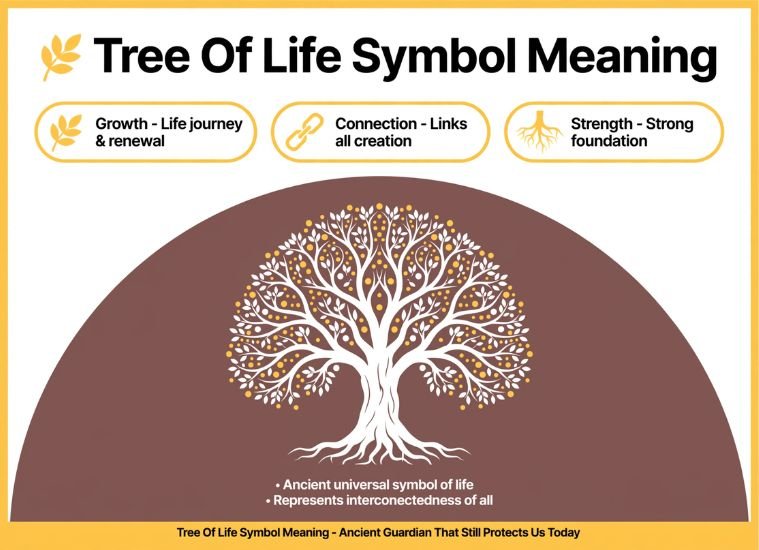
The Tree of Life is one of the oldest and most meaningful protection symbols found in many cultures and religions. It represents the connection between heaven, earth, and all living things. With its strong roots and wide branches, the Tree of Life reminds people of strength, growth, wisdom, and balance. Many traditions also view it as a symbol of protection because it reflects stability and the cycle of life.
Today, the Tree of Life appears in jewelry, artwork, home décor, and spiritual designs around the world.
| Symbol | Description | Meaning |
| Tree of Life | A symbolic tree with roots, trunk, and spreading branches. | Represents growth, connection, life, and strength. |
| Tree of Life Roots | The deep roots of the symbolic tree. | Represent grounding, family roots, and stability. |
| Tree of Life Branches | Branches extending outward and upward. | Represent growth, connection, and new possibilities. |
| Tree of Life Trunk | The central structure connecting roots and branches. | Represents stability, strength, and continuity. |
| Tree of Life Leaves | Leaves covering the branches. | Represent life, growth, renewal, and vitality. |
| Tree of Life Circle | A Tree of Life enclosed within a circle. | Represents unity, completeness, and the cycle of life. |
| Tree of Life with Roots | A tree showing its roots beneath the ground. | Represents ancestry, grounding, and strong foundations. |
| Tree of Life with Birds | Birds placed among the tree’s branches. | Represents freedom, connection, and the journey of life. |
| Tree of Life with Animals | Animals shown around or within the tree. | Represents connection between living beings and nature. |
| Celtic Tree of Life | A Tree of Life designed with Celtic-inspired branches and roots. | Represents interconnectedness, growth, and continuity. |
| Tree of Life Pendant | A necklace featuring the symbolic tree. | Represents growth, family connection, and life. |
| Tree of Life Bracelet | A bracelet decorated with the tree symbol. | Represents connection, strength, and personal growth. |
| Tree of Life Necklace | A necklace carrying a Tree of Life pendant. | Represents family, growth, and continuity. |
| Tree of Life Wall Art | A decorative Tree of Life displayed in a home. | Represents family bonds, harmony, and growth. |
| Tree of Life Emblem | A stylized tree used as a symbolic emblem. | Represents life, stability, and connection. |
| Tree of Life Circle Design | Branches and roots forming a circular pattern. | Represents balance, unity, and the cycle of life. |
| Tree of Life Roots and Branches | A complete tree showing both underground roots and canopy. | Represents the connection between ancestry, present life, and future growth. |
| Tree of Life with Fruit | A tree carrying fruit among its branches. | Represents abundance, growth, and the results of effort. |
| Tree of Life Forest | A Tree of Life concept shown among other trees. | Represents community, connection, and shared strength. |
| Tree of Life | The Tree of Life as a widely used symbolic design. | Represents life, growth, family, connection, stability, and renewal. |
Dreamcatcher Symbol Meaning
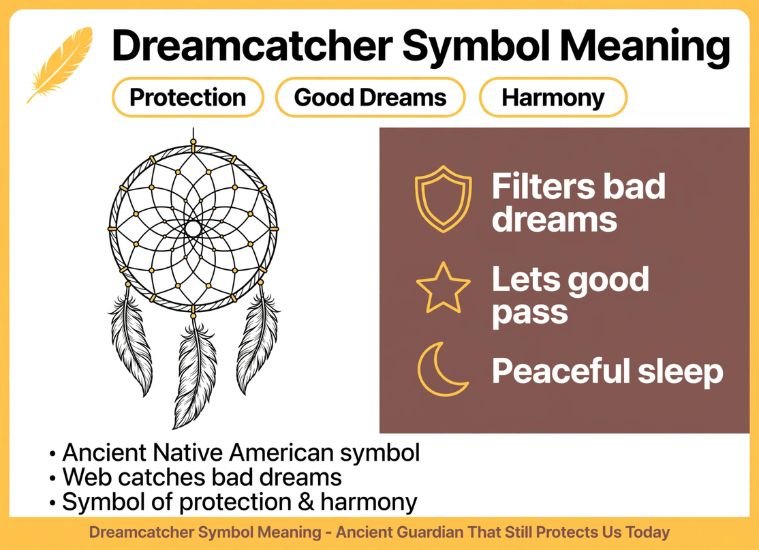
The Dreamcatcher is a traditional handmade object that originated with the Ojibwe people and later became known in other Indigenous communities. It is made with a woven web inside a circular hoop, often decorated with feathers and beads. In its traditional cultural context, it is associated with filtering dreams, allowing positive dreams to pass through while unwanted dreams are caught in the web.
Today, Dreamcatchers are also used as decorative items, though it is important to recognize and respect their Indigenous cultural origins.
| Symbol | Description | Meaning |
| Dreamcatcher | A circular woven object associated with Indigenous traditions, especially among Anishinaabe peoples. | Traditionally associated with filtering or protecting sleepers from harmful dreams. |
| Dreamcatcher Web | The woven web inside the circular frame. | Traditionally represents a protective filter for dreams. |
| Dreamcatcher Circle | The circular outer frame. | Represents continuity and the cycle of life in many modern interpretations. |
| Dreamcatcher Feathers | Feathers hanging beneath the woven frame. | Can represent breath, air, guidance, or connection depending on tradition. |
| Dreamcatcher Beads | Beads incorporated into the web or hanging strands. | May represent people, memories, or spiritual elements depending on interpretation. |
| Dreamcatcher Hoop | The circular frame holding the web. | Represents unity, continuity, and protection. |
| Dreamcatcher Web and Feathers | A traditional-style design combining web and hanging feathers. | Represents protection and positive dreams in popular interpretations. |
| Blue Dreamcatcher | A dreamcatcher decorated with blue elements. | Often associated with calmness, peace, and protection. |
| White Dreamcatcher | A dreamcatcher featuring white materials. | Often associated with peace, purity, and calmness. |
| Dreamcatcher Pendant | A small dreamcatcher worn as jewelry. | Represents protection and positive intentions. |
| Dreamcatcher Necklace | A necklace featuring a miniature dreamcatcher. | Represents personal protection and peaceful dreams. |
| Dreamcatcher Bracelet | A bracelet decorated with dreamcatcher imagery. | Represents protection and positive energy. |
| Dreamcatcher Wall Hanging | A decorative dreamcatcher displayed indoors. | Represents protection and peaceful surroundings in popular usage. |
| Feather Dreamcatcher | A dreamcatcher emphasizing its hanging feathers. | Represents air, movement, and guidance in modern interpretations. |
| Beaded Dreamcatcher | A dreamcatcher decorated with beads. | Represents beauty, connection, and personal meaning. |
| Owl Dreamcatcher | A dreamcatcher incorporating an owl design. | Often represents wisdom, awareness, and protection in modern artwork. |
| Moon Dreamcatcher | A dreamcatcher combined with moon imagery. | Represents dreams, night, intuition, and protection. |
| Dreamcatcher Charm | A small dreamcatcher used as a charm. | Represents protection and positive dreams. |
| Dreamcatcher Circle and Web | The central woven structure of a dreamcatcher. | Represents traditional dream protection in popular interpretations. |
| Dreamcatcher | The dreamcatcher as a widely recognized cultural and decorative symbol. | Traditionally connected with protection from harmful dreams, while modern uses often associate it with peace, hope, and positive dreams. |
Triquetra Symbol Meaning
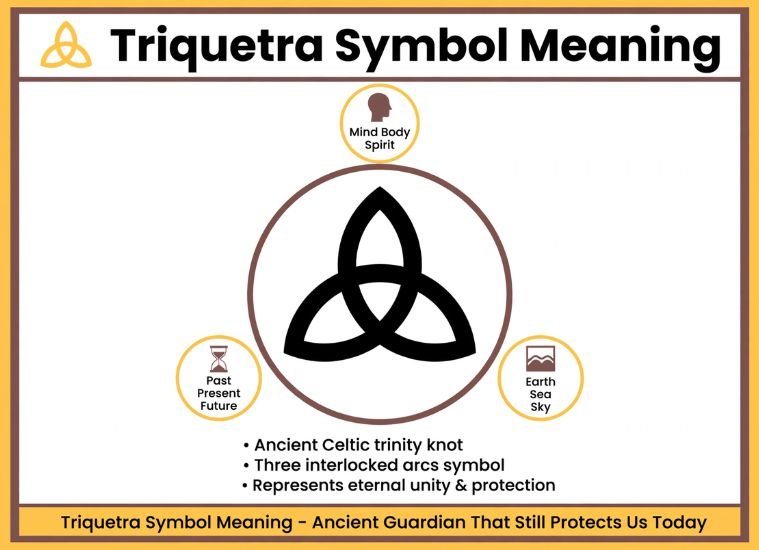
The Triquetra is a symbol formed by three connected loops. It has appeared in Celtic art for centuries and is associated with unity, eternity, and interconnectedness. In some Christian traditions, it has also been used to represent the Holy Trinity.
Its continuous design has no beginning or end, making it a symbol of lasting connection and harmony.
| Symbol | Description | Meaning |
| Triquetra | A three-pointed knot made from interwoven lines. | Represents unity, continuity, and threefold concepts. |
| Celtic Triquetra | A triquetra used in Celtic-inspired artwork. | Represents connection, eternity, and interconnectedness. |
| Triquetra Knot | Three looping forms joined into one design. | Represents unity and an unbroken connection. |
| Triquetra Circle | A triquetra enclosed within a circle. | Represents completeness, continuity, and wholeness. |
| Triquetra Pendant | A triquetra worn as jewelry. | Represents connection, continuity, and personal meaning. |
| Triquetra Necklace | A necklace featuring the three-part knot. | Represents unity and lasting bonds. |
| Triquetra Bracelet | A bracelet decorated with the symbol. | Represents connection and continuity. |
| Triquetra Ring | A ring featuring interwoven triquetra lines. | Represents an enduring bond and unity. |
| Triquetra with Circle | A three-loop knot surrounded by a circular line. | Represents eternity and completeness. |
| Triquetra Cross | A triquetra combined with a Christian cross. | Represents Christian faith and the Trinity in some modern designs. |
| Triquetra Tree | A Tree of Life combined with a triquetra. | Represents life, connection, growth, and continuity. |
| Triquetra Heart | A heart combined with the threefold knot. | Represents unity, connection, and affection. |
| Triquetra Shield | A triquetra displayed inside a shield. | Represents protection, strength, and unity. |
| Triquetra Emblem | A stylized threefold knot used as an emblem. | Represents connection, balance, and continuity. |
| Triquetra Spiral | A triquetra incorporating curved or spiral elements. | Represents movement, growth, and interconnectedness. |
| Triquetra Knotwork | Decorative interlacing based on the threefold design. | Represents continuity and enduring connection. |
| Threefold Knot | A knot formed around three connected points. | Represents threefold unity and balance. |
| Endless Triquetra | A triquetra designed with continuous lines. | Represents eternity and an unbroken cycle. |
| Triquetra Charm | A small threefold knot used as a charm. | Represents unity, connection, and continuity. |
| Triquetra | The triquetra as a widely used threefold symbol. | Represents unity, continuity, interconnectedness, and, in some Christian contexts, the Holy Trinity. |
Pentacle Symbol Meaning
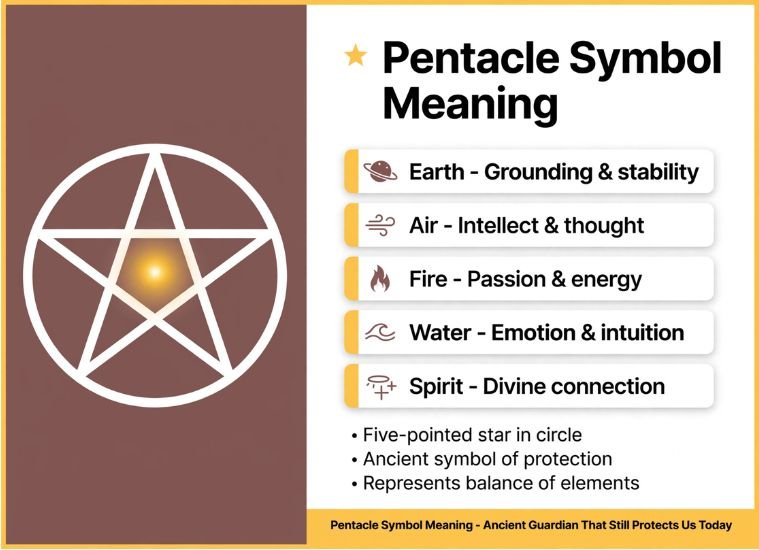
The Pentacle is a five-pointed star enclosed within a circle. It has been used in different spiritual and cultural traditions with a variety of meanings. In some traditions, it represents protection, balance, and the connection between the natural elements.
Because its meaning depends on cultural and religious context, it should be understood within the tradition in which it is used.
| Symbol | Description | Meaning |
| Pentacle | A five-pointed star enclosed within a circle. | Represents balance, unity, and spiritual symbolism. |
| Five-Pointed Pentacle | A five-pointed star used as the central design. | Represents fivefold balance and harmony. |
| Upright Pentacle | A pentacle with one point facing upward. | Often represents balance, protection, and spiritual practice. |
| Pentacle Circle | A star enclosed by a complete circle. | Represents unity, wholeness, and interconnectedness. |
| Pentacle Pendant | A pentacle worn as jewelry. | Represents personal spiritual identity or protection. |
| Pentacle Necklace | A necklace featuring a pentacle. | Represents spiritual symbolism and personal belief. |
| Pentacle Bracelet | A bracelet decorated with a pentacle. | Represents personal connection to the symbol. |
| Pentacle Ring | A ring featuring a five-pointed star within a circle. | Represents balance, identity, and spiritual meaning. |
| Pentacle Amulet | A pentacle used as a protective charm. | Represents protection and spiritual strength in some traditions. |
| Pentacle Shield | A pentacle displayed inside a shield. | Represents protection, balance, and defense. |
| Pentacle Emblem | A stylized pentacle used as an emblem. | Represents balance, unity, and spiritual symbolism. |
| Pentacle with Elements | A pentacle associated with earth, air, fire, water, and spirit. | Represents balance among the five classical elements in some Western esoteric traditions. |
| Silver Pentacle | A pentacle represented in silver. | Often associated with spirituality, reflection, and protection. |
| Gold Pentacle | A pentacle represented in gold. | Often associated with value, strength, and spiritual significance. |
| Pentacle Charm | A small pentacle used as a charm. | Represents personal protection or spiritual identity. |
| Pentacle Wall Symbol | A pentacle displayed as decorative or spiritual artwork. | Represents balance and protection in some traditions. |
| Pentacle Star | The five-pointed star forming the center of the pentacle. | Represents balance and the fivefold structure of the symbol. |
| Pentacle Circle and Star | The complete five-pointed star enclosed by a circle. | Represents unity, balance, and wholeness. |
| Protective Pentacle | A pentacle specifically used as a protective symbol. | Represents spiritual protection and balance. |
| Pentacle | The pentacle as a traditional esoteric symbol. | Represents balance, unity, protection, and spiritual symbolism, with meanings varying by tradition. |
Saint Benedict Medal Symbol Meaning
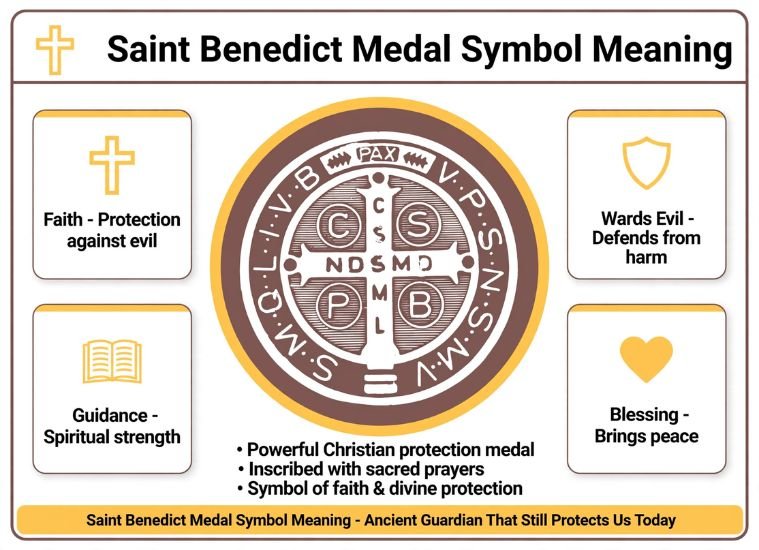
The Saint Benedict Medal is a Christian devotional medal associated with Saint Benedict of Nursia. It contains prayers and religious inscriptions that reflect faith in God’s protection and guidance. Many Christians wear or keep the medal as a reminder to remain faithful in daily life.
| Symbol | Description | Meaning |
| Saint Benedict Medal | A Catholic medal bearing images and inscriptions associated with Saint Benedict. | Represents Christian faith, prayer, and protection. |
| Saint Benedict Cross | The cross featured prominently on the medal. | Represents Christ, Christian faith, and spiritual protection. |
| CSPB | Letters appearing on the medal that refer to Saint Benedict. | Represent the Latin phrase associated with Saint Benedict as the Holy Father of the Benedictines. |
| CSSML | Letters on the cross referring to a traditional Latin prayer. | Express a prayer asking that the cross be a source of light and protection. |
| NDSMD | Letters connected with a prayer against evil. | Express a rejection of harmful or evil influences. |
| VRSNSMV | Letters from the traditional exorcism prayer on the medal. | Express a prayer against temptation and evil. |
| Crux Sacra Sit Mihi Lux | A Latin phrase associated with the medal. | Means that the Holy Cross may be a light and source of spiritual guidance. |
| Non Draco Sit Mihi Dux | A Latin phrase found in the medal’s prayer inscriptions. | Expresses the desire not to be led by evil. |
| Saint Benedict Image | An image of Saint Benedict included on some versions of the medal. | Represents his role as a Christian saint and spiritual teacher. |
| Saint Benedict Medal Cross | The cross and surrounding letters forming the main design. | Represents faith, prayer, and spiritual protection. |
| Saint Benedict Medal Pendant | The medal worn around the neck. | Represents personal devotion and a reminder of Christian prayer. |
| Saint Benedict Necklace | A necklace featuring the medal. | Represents faith, devotion, and protection. |
| Saint Benedict Bracelet | A bracelet carrying the medal. | Represents personal devotion and faith. |
| Saint Benedict Medal Charm | A smaller version used as a charm. | Represents Christian faith and prayerful protection. |
| Saint Benedict Medal Reverse | The reverse side containing the cross and Latin inscriptions. | Represents prayers for protection against evil and temptation. |
| Saint Benedict Medal Front | The side depicting Saint Benedict in many traditional versions. | Represents devotion to Saint Benedict and Christian faith. |
| Cross and Letters | The cross surrounded by traditional Latin initials. | Represents Christian prayer and rejection of evil. |
| Medal of Protection | A common devotional description of the medal. | Represents prayerful protection within Catholic tradition. |
| Saint Benedict Cross Medal | A version emphasizing the cross and inscriptions. | Represents faith, prayer, and spiritual strength. |
| Saint Benedict Medal | The Catholic devotional medal associated with Saint Benedict. | Represents faith, prayer, devotion, and protection from evil and temptation. |
Nazar Boncuğu Symbol Meaning
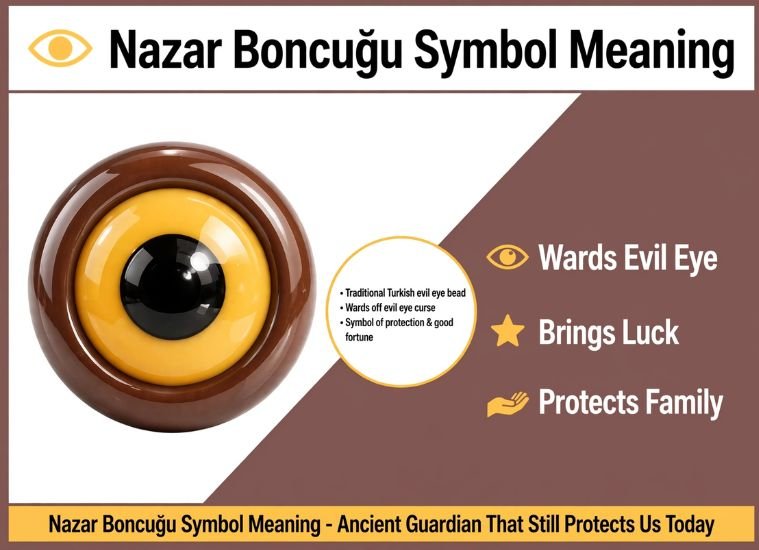
The Nazar Boncuğu is a traditional blue glass amulet that is widely recognized in Türkiye and nearby regions. It is closely associated with the cultural belief in protection from the evil eye. The symbol is commonly displayed in homes, workplaces, vehicles, and personal accessories as part of long-standing traditions.
Today, the Nazar Boncuğu is appreciated both for its cultural heritage and its distinctive blue design.
| Symbol | Description | Meaning |
| Nazar Boncuğu | A traditional Turkish blue-and-white eye-shaped amulet. | Represents protection from the evil eye. |
| Blue Nazar | The familiar blue glass version of the amulet. | Represents protection against harmful envy or attention. |
| Nazar Eye | The eye design at the center of the amulet. | Represents watchfulness and protection. |
| Nazar Bead | A small glass bead featuring concentric circles. | Represents protection and good fortune in popular Turkish tradition. |
| Nazar Bracelet | A bracelet decorated with Nazar beads. | Represents personal protection from the evil eye. |
| Nazar Necklace | A necklace featuring a Nazar charm. | Represents protection and positive intentions. |
| Nazar Pendant | An eye-shaped pendant worn as jewelry. | Represents personal protection and cultural tradition. |
| Nazar Charm | A small Nazar amulet carried or worn. | Represents protection from harmful envy. |
| Nazar Wall Hanging | A large Nazar displayed in a home or workplace. | Represents protection of the surrounding space. |
| Nazar Door Charm | A Nazar placed near an entrance. | Represents protection of the home or building. |
| Nazar Keychain | A small Nazar attached to keys or belongings. | Represents everyday protection. |
| Nazar Ring | A ring featuring the eye-shaped design. | Represents personal protection and awareness. |
| Nazar Bead Chain | Multiple Nazar beads arranged together. | Represents continued protection and cultural tradition. |
| Nazar Glass Eye | A glass version of the traditional eye amulet. | Represents protection against the evil eye. |
| Blue and White Nazar | The classic combination of blue, white, and dark concentric circles. | Represents protection and warding off negative attention. |
| Nazar Home Symbol | A Nazar displayed inside a home. | Represents household protection in popular tradition. |
| Nazar Ornament | A decorative Nazar used in homes or personal spaces. | Represents protection and good fortune. |
| Nazar Amulet | The Nazar used specifically as a protective charm. | Represents protection from the evil eye. |
| Nazar Eye Bead | A small bead carrying the characteristic eye pattern. | Represents vigilance and protection. |
| Nazar Boncuğu | The Turkish protective eye amulet. | Represents protection from the evil eye, envy, and harmful attention. |
Aegishjalmur Symbol Meaning
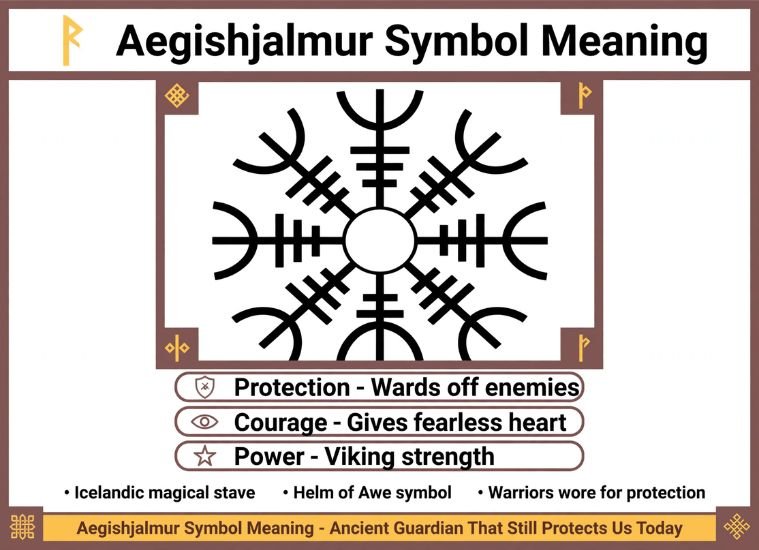
The Aegishjalmur, often called the Helm of Awe, is a symbol found in Icelandic manuscripts and connected with Norse tradition. It consists of eight arms extending from a central point and has historically been associated with courage, resilience, and protection in folklore.
Today, the Aegishjalmur appears in artwork, jewelry, clothing, and historical designs inspired by Norse culture.
| Symbol | Description | Meaning |
| Aegishjalmur | A Norse magical symbol also known as the Helm of Awe. | Represents protection, strength, and courage. |
| Helm of Awe | The common English name for Aegishjalmur. | Represents protection and power in Norse tradition and later Icelandic magical traditions. |
| Aegishjalmur Circle | The central structure from which the symbol’s arms extend. | Represents unity and the central source of protective power. |
| Aegishjalmur Arms | The repeated radial arms forming the symbol. | Represent protection, strength, and defensive power. |
| Eight-Arm Aegishjalmur | A common modern form featuring eight radiating arms. | Represents protection and strength. |
| Aegishjalmur Rune Design | A design combining the symbol with rune-like forms. | Represents Norse-inspired protection and power. |
| Aegishjalmur Pendant | The symbol worn as jewelry. | Represents personal strength and protection. |
| Aegishjalmur Necklace | A necklace featuring the Helm of Awe. | Represents courage, protection, and Norse heritage. |
| Aegishjalmur Bracelet | A bracelet displaying the symbol. | Represents personal protection and strength. |
| Aegishjalmur Tattoo | The symbol used as body art. | Represents strength, courage, and protection for some modern users. |
| Aegishjalmur Amulet | The symbol used as a protective charm. | Represents protection and fearlessness. |
| Helm of Awe Shield | A shield incorporating Aegishjalmur. | Represents defense, courage, and resilience. |
| Aegishjalmur Warrior Symbol | The symbol associated with warrior imagery. | Represents courage, confidence, and strength. |
| Aegishjalmur Circle Design | A symmetrical radial version of the symbol. | Represents focus, protection, and balance. |
| Aegishjalmur Emblem | A stylized version used as an emblem. | Represents strength, courage, and protection. |
| Aegishjalmur Rune Charm | A small charm inspired by the symbol. | Represents protection and personal strength. |
| Aegishjalmur Norse Symbol | A modern name for a symbol connected with Icelandic magical traditions. | Represents protective and intimidating power in those traditions. |
| Helm of Awe Amulet | A protective form of the symbol. | Represents courage and defense against perceived threats. |
| Aegishjalmur Warrior Emblem | A warrior-themed representation of the symbol. | Represents fearlessness, strength, and protection. |
| Aegishjalmur | A symbol from Icelandic magical traditions often linked to protection and power. | Represents strength, courage, protection, and the ability to face fear. |
Om Symbol Meaning
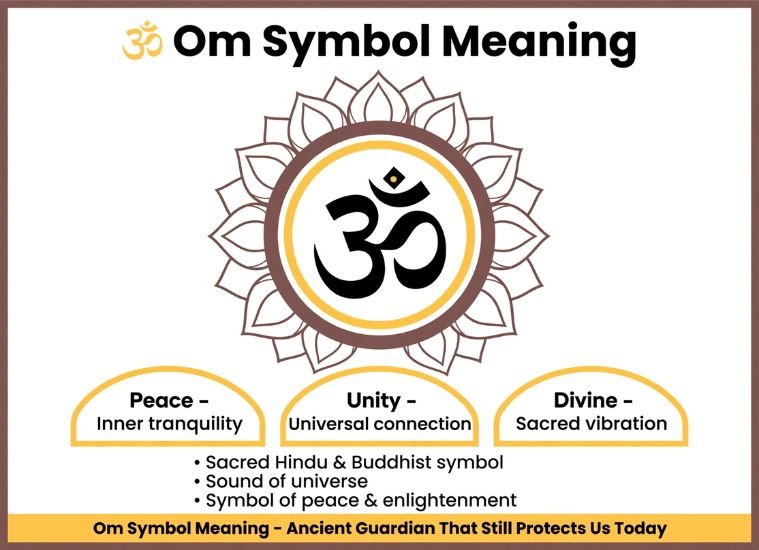
The Om symbol is one of the most sacred symbols in Hinduism and is also respected in Buddhism, Jainism, and other Dharmic traditions. It represents the sacred sound “Om,” which is used during prayer, meditation, and spiritual practice.
The Om symbol is widely seen in temples, artwork, jewelry, and meditation spaces around the world.
| Symbol | Description | Meaning |
| Om | A sacred syllable and symbol in several Indian religions. | Represents sacred sound, spiritual reality, and consciousness. |
| Om Symbol | The written form of the sacred syllable. | Represents spiritual unity and the nature of ultimate reality. |
| Om ॐ | The traditional Devanagari form of Om. | Represents sacred sound and spiritual consciousness. |
| Om Pendant | An Om symbol worn as jewelry. | Represents spirituality, meditation, and personal devotion. |
| Om Necklace | A necklace featuring the Om symbol. | Represents spiritual practice and inner awareness. |
| Om Bracelet | A bracelet decorated with Om. | Represents mindfulness, spirituality, and personal connection. |
| Om Ring | A ring featuring the sacred symbol. | Represents spiritual awareness and devotion. |
| Om Wall Art | Om displayed as decorative or spiritual artwork. | Represents peace, meditation, and spiritual practice. |
| Om in Meditation | Om used alongside meditation practices. | Represents focus, mindfulness, and spiritual awareness. |
| Om and Lotus | Om combined with a lotus flower. | Represents spiritual growth, purity, and consciousness. |
| Om and Mandala | Om placed within a geometric mandala. | Represents meditation, balance, and spiritual unity. |
| Om Circle | Om placed inside a circular design. | Represents wholeness, unity, and spiritual completeness. |
| Om Chant | The sacred syllable spoken or repeated in spiritual practice. | Represents meditation, focus, and connection with the sacred. |
| Om Emblem | A stylized Om used as an emblem. | Represents spirituality, peace, and consciousness. |
| Golden Om | Om represented in gold. | Represents sacred value, spirituality, and reverence. |
| Om Temple Symbol | Om used within Hindu religious settings. | Represents sacred reality and devotion. |
| Om Meditation Symbol | Om used as a focus for meditation. | Represents inner peace, concentration, and awareness. |
| Om Charm | A small Om symbol used as a personal item. | Represents spirituality and personal connection to sacred practice. |
| Om and Sun | Om combined with solar imagery. | Represents spiritual energy, consciousness, and life. |
| Om | The sacred syllable and symbol used in Hinduism, Buddhism, Jainism, and related traditions. | Represents sacred sound, consciousness, spiritual unity, and ultimate reality, with meanings varying by tradition. |
Lotus Flower Symbol Meaning
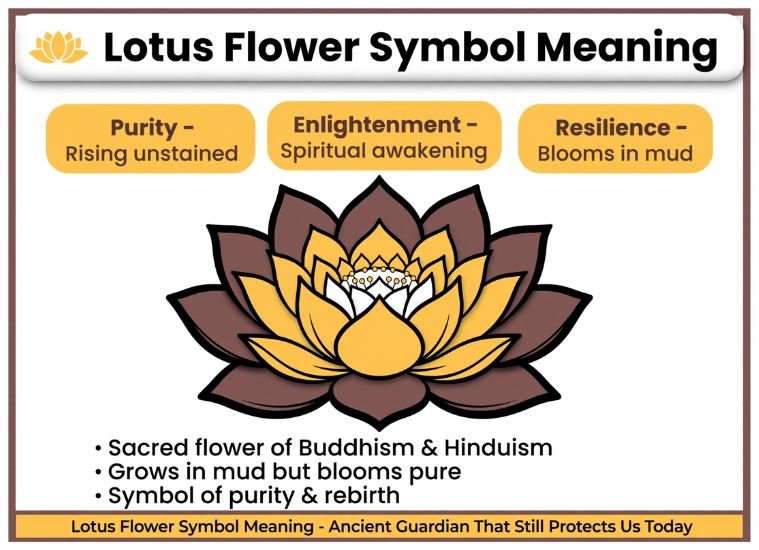
The Lotus Flower grows in muddy water yet blooms into a clean and beautiful flower. Because of this, it has become a symbol of purity, renewal, resilience, and personal growth in many Asian cultures and religions.
The Lotus appears in religious art, architecture, meditation spaces, and decorative designs throughout the world.
| Symbol | Description | Meaning |
| Lotus Flower | A water flower that rises above the surface from muddy water. | Represents purity, growth, resilience, and spiritual awakening. |
| Pink Lotus | A pink lotus flower often used in Buddhist and Hindu imagery. | Represents spiritual significance, purity, and devotion. |
| White Lotus | A lotus with white petals. | Represents purity, peace, and spiritual clarity. |
| Blue Lotus | A blue lotus associated with ancient Egyptian and other symbolic traditions. | Represents wisdom, rebirth, and spiritual awareness. |
| Red Lotus | A lotus with red or deep pink petals. | Represents compassion, devotion, and the heart in some Buddhist traditions. |
| Lotus Petals | The individual petals forming the flower. | Represent growth, beauty, and stages of spiritual development. |
| Lotus Root | The part of the lotus growing beneath the water. | Represents grounding, resilience, and connection to one’s roots. |
| Lotus Bud | A lotus before it fully opens. | Represents potential, growth, and spiritual development. |
| Open Lotus | A fully opened lotus flower. | Represents awakening, clarity, and spiritual growth. |
| Lotus and Om | A lotus combined with the Om symbol. | Represents spiritual growth, meditation, and sacred awareness. |
| Lotus Mandala | A lotus arranged within a circular geometric design. | Represents balance, harmony, and spiritual development. |
| Lotus Circle | A lotus placed within a circular frame. | Represents completeness, unity, and renewal. |
| Lotus Pendant | A lotus worn as jewelry. | Represents growth, purity, and personal transformation. |
| Lotus Necklace | A necklace featuring a lotus flower. | Represents spiritual growth and resilience. |
| Lotus Bracelet | A bracelet decorated with lotus imagery. | Represents renewal, peace, and personal growth. |
| Lotus Emblem | A stylized lotus used as a symbolic emblem. | Represents purity, strength, and renewal. |
| Lotus in Water | A lotus growing above a pond or lake. | Represents resilience and rising above difficult circumstances. |
| Lotus with Sun | A lotus shown beneath or alongside the sun. | Represents renewal, vitality, and awakening. |
| Lotus Bloom | A fully developed lotus flower. | Represents transformation, beauty, and spiritual awakening. |
| Lotus Flower | The lotus as a widely recognized spiritual and cultural symbol. | Represents purity, resilience, renewal, growth, and spiritual awakening. |
Protection Symbols Across Different Cultures
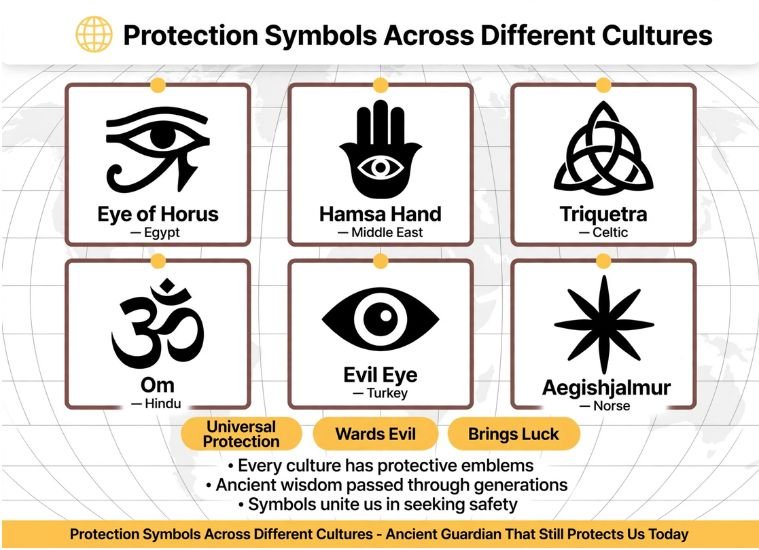
Protection symbols exist in nearly every part of the world. Although their meanings differ, many share common themes such as hope, courage, faith, healing, resilience, and well-being. Learning about these symbols helps us appreciate the diversity of human history and cultural traditions.
| Symbol | Description | Meaning |
| Hamsa | A hand-shaped protective symbol used across several Middle Eastern and North African traditions. | Represents protection, blessings, and safety. |
| Nazar Boncuğu | A Turkish blue-and-white eye-shaped amulet. | Represents protection from the evil eye and harmful attention. |
| Evil Eye | An eye-shaped protective symbol found in many cultures. | Represents protection from envy, misfortune, and harmful intentions. |
| Eye of Horus | An ancient Egyptian eye symbol associated with Horus. | Represents protection, healing, restoration, and well-being. |
| Ankh | An ancient Egyptian symbol shaped like a cross with a loop. | Represents life and vitality. |
| Saint Benedict Medal | A Catholic devotional medal featuring a cross and traditional Latin inscriptions. | Represents Christian faith, prayer, and protection from evil. |
| Celtic Shield Knot | An interwoven knot inspired by Celtic designs. | Represents protection, continuity, and strength. |
| Aegishjalmur | A symbol associated with Icelandic magical traditions and known as the Helm of Awe. | Represents protection, courage, and power. |
| Triquetra | A threefold interwoven knot found in Celtic-inspired designs and other contexts. | Represents unity, continuity, and interconnectedness. |
| Om | A sacred symbol and syllable in Indian religious traditions. | Represents sacred sound, consciousness, and spiritual unity. |
| Lotus | A flower with major symbolic importance in Hinduism and Buddhism. | Represents purity, resilience, growth, and spiritual awakening. |
| Torii | A Japanese gate associated with Shinto sacred spaces. | Represents the boundary between ordinary and sacred space. |
| Ganesha | A Hindu deity commonly associated with removing obstacles. | Represents protection, wisdom, and overcoming difficulties. |
| Vajra | A ritual object and symbol in Buddhism and Hindu traditions. | Represents spiritual power, firmness, and indestructibility. |
| Dharma Wheel | A Buddhist symbol featuring a wheel with spokes. | Represents Buddhist teachings, spiritual practice, and the path to liberation. |
| Dreamcatcher | A protective object associated particularly with Anishinaabe traditions. | Traditionally associated with protecting sleepers from harmful dreams. |
| Four-Leaf Clover | A rare clover traditionally associated with good fortune in Irish and broader Western culture. | Represents luck and positive fortune. |
| Horseshoe | A U-shaped iron object traditionally associated with good luck. | Represents protection and good fortune in popular tradition. |
| Guardian Lion | Lion statues traditionally placed near buildings in parts of East and Southeast Asia. | Represents protection, strength, and guardianship. |
| Protection Symbols | Protective symbols from different cultures and religious traditions. | They can represent safety, faith, good fortune, spiritual protection, resilience, or defense, depending on their cultural context. |
Frequently Asked Questions About Protection Symbols
Q1: What are protection symbols?
A1: Protection symbols are signs, designs, or images that have traditionally been associated with safety, protection, strength, or warding off harm.
Q2: What are some common protection symbols?
A2: Common protection symbols include the Hamsa, evil eye, protective knot, and ankh, although their meanings vary across cultures and traditions.
Q3: Why are protection symbols used?
A3: Protection symbols are often used as meaningful reminders of safety, faith, courage, or spiritual protection.
Q4: Can protection symbols have different meanings?
A4: Yes, the meaning of a protection symbol can change depending on the culture, religion, historical period, and context in which it is used.
Q5: Where can protection symbols be found?
A5: Protection symbols can appear in jewelry, artwork, architecture, clothing, tattoos, manuscripts, and traditional cultural objects.
Q6: How do I choose a protection symbol?
A6: Choose a protection symbol by learning about its cultural meaning and selecting one that respectfully represents the value or idea you want it to express.