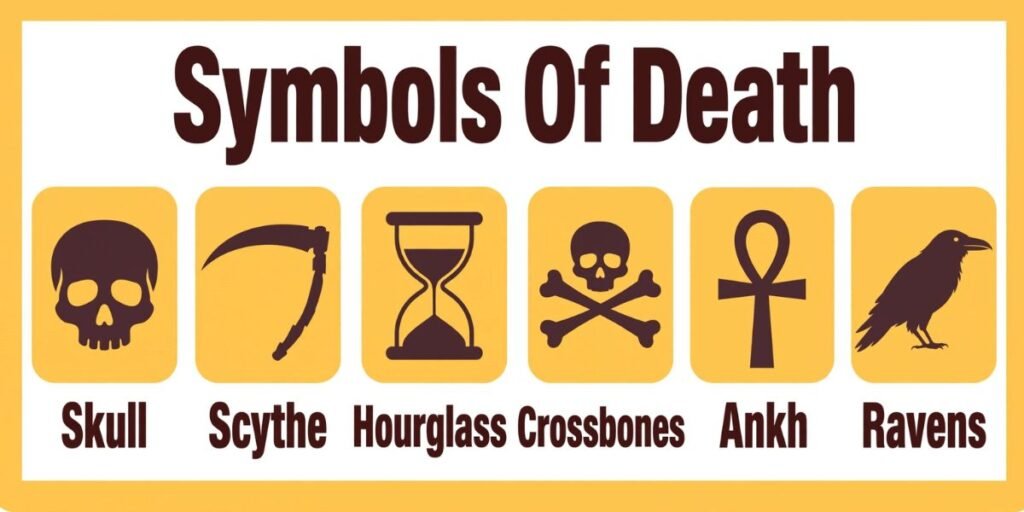
What symbols come to mind when people think about death? A skull, a dark bird, a fading candle, or a quiet grave may be some of the first images people imagine. Symbols of death appear in art, literature, religion, folklore, history, and memorial traditions. They can represent mortality, grief, remembrance, endings, transformation, or the short nature of human life. Their meanings are not always negative.
A candle may honor someone who has died, while a fallen leaf can represent the natural end of a life cycle. Some symbols have different meanings across cultures, so their context matters. This guide explores common symbols of death and explains what they can represent in a clear and respectful way.
From ancient images such as the skull and hourglass to flowers, animals, and memorial objects, each symbol offers a different way to express loss, remembrance, change, and the human experience of mortality.
Symbols Of Death And Mortality
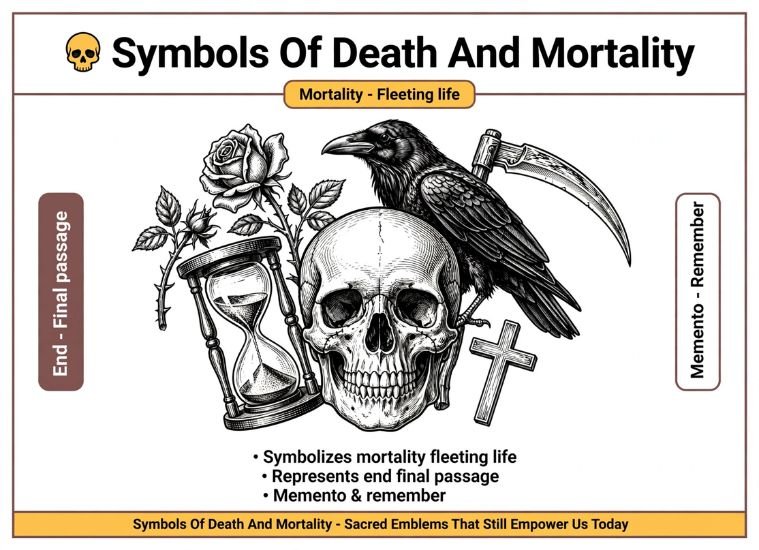
Death symbols often remind people that life has an ending. Many of these images have been used for centuries in art, literature, religious traditions, monuments, and memorials. Their meanings can focus on mortality, the passage of time, or the temporary nature of life.
| Name | Meaning | Description |
| Human Skull | Mortality | A skull is one of the most widely recognized symbols of death and reminds people that human life is temporary. |
| Skeleton | Death | A skeleton represents the physical remains of a person after death and is common in historical art and folklore. |
| Hourglass | Passing time | An hourglass represents time running out and is often used as a reminder of mortality. |
| Grave | Final resting place | A grave represents burial and serves as a physical place where the dead may be remembered. |
| Tombstone | Remembrance | A tombstone marks a burial place and often carries a person’s name, dates, or memorial message. |
| Coffin | Burial | A coffin is associated with funeral practices and the physical process of burial. |
| Funeral Bell | Mourning | A bell can mark a funeral or period of mourning in some cultural and religious traditions. |
| Fallen Leaf | Life’s ending | A fallen leaf can represent the natural end of a life cycle and the passing of time. |
| Withered Flower | Fading life | A dying flower can represent beauty or life coming to an end. |
| Extinguished Candle | End of life | A candle that has gone out can represent the ending of life or the loss of someone’s presence. |
| Broken Candle | Loss | A broken candle can symbolize interrupted life, grief, or an ending. |
| Black Ribbon | Mourning | Black ribbons are commonly used to express grief, remembrance, or respect for someone who has died. |
| Funeral Veil | Grief | A dark veil has been used in mourning traditions to express sorrow and respect for the dead. |
| Mourning Dress | Grief | Traditional mourning clothing has been used in many societies to visibly express loss. |
| Cemetery Gate | Passage | A cemetery gate can represent the boundary between ordinary life and a place of remembrance. |
| Empty Chair | Absence | An empty chair can represent the absence of someone who has died and the space they left behind. |
| Silent Bell | Loss | A bell without sound can be used artistically to suggest silence, mourning, and absence. |
| Closed Door | Ending | A closed door can represent the end of a chapter or the transition from life to death. |
| Fading Light | Mortality | Diminishing light can represent life’s gradual ending and the approach of death. |
| Wilted Branch | Decline | A withered branch can symbolize aging, loss, and the end of natural growth. |
Symbols Of Death
Search a symbol of death to learn what it represents.
Skull & Crossbones
Symbols Of Death And Grief
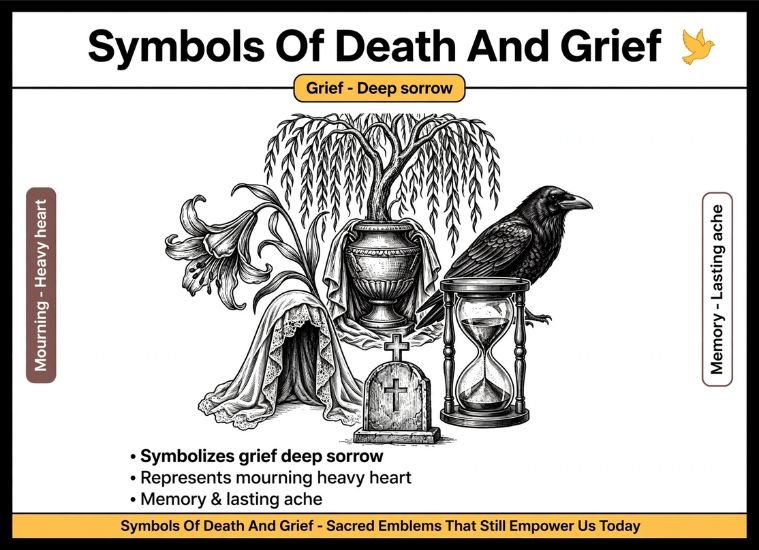
Death often brings grief, and many symbols focus more on emotional loss than on death itself. These images can appear on memorials, sympathy cards, gravestones, jewelry, paintings, and remembrance ceremonies.
| Name | Meaning | Description |
| White Rose | Remembrance | White roses are often used in memorial settings and can express respect, innocence, and remembrance. |
| Lily | Mourning | Lilies are commonly associated with funerals and memorial services, especially in Christian traditions. |
| Forget-Me-Not | Memory | The forget-me-not is strongly associated with remembering someone and keeping their memory alive. |
| Memorial Candle | Remembrance | Lighting a candle can create a quiet moment to honor someone who has died. |
| Black Armband | Mourning | A black armband has historically been worn as a visible sign of grief. |
| Memorial Photograph | Memory | A photograph can preserve the image of a person and become part of a personal memorial. |
| Gravestone Flowers | Respect | Flowers placed at graves are a common way to show remembrance and respect. |
| Condolence Card | Sympathy | A condolence card allows people to express support to someone who is grieving. |
| Memorial Ribbon | Remembrance | A ribbon can be used to honor a person or represent collective mourning. |
| Angel Statue | Comfort | Angel figures are often used in memorial art and may represent protection, peace, or spiritual comfort. |
| Memorial Bench | Tribute | A memorial bench can create a permanent place where people can remember someone who has died. |
| Memory Tree | Remembrance | A tree planted in someone’s memory can represent continuing life and a lasting tribute. |
| Remembrance Stone | Tribute | A stone engraved with a name or message can serve as a lasting memorial. |
| Funeral Flower Wreath | Honor | A wreath can be placed at funerals or graves as a sign of respect and remembrance. |
| Memorial Portrait | Legacy | A portrait can preserve the memory and personality of someone who has died. |
| Grief Journal | Reflection | A journal can provide a private place for someone to record memories and feelings after a loss. |
| Memory Box | Keepsake | A memory box can hold photographs, letters, clothing, or other items connected with a loved one. |
| Memorial Garden | Peace | A garden created in someone’s memory can offer a quiet place for reflection. |
| Engraved Stone | Lasting memory | An engraved stone can preserve a person’s name, dates, or meaningful words for years. |
| Remembrance Lantern | Hope | A lantern can represent memory, guidance, and the light someone left in the lives of others. |
Explore the history, meanings, and cultural heritage connected to Irish symbols traditions and learn how these meaningful designs continue to represent Irish culture and identity.
Symbols Of Death In Nature
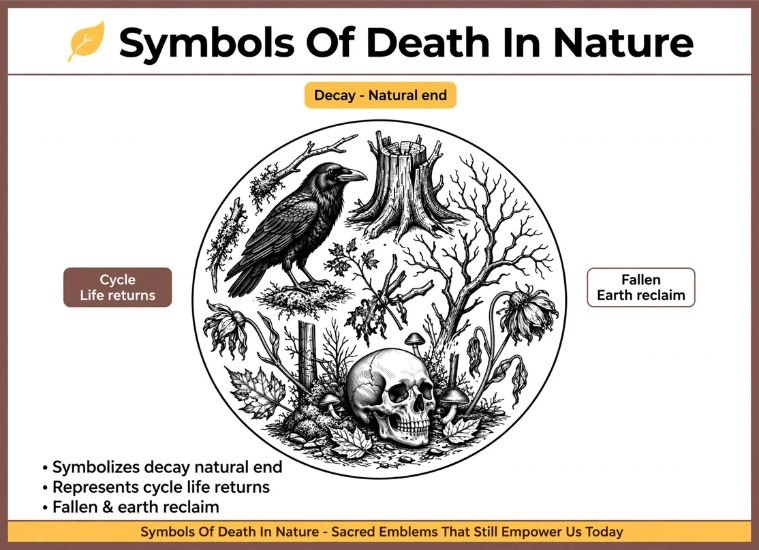
Nature provides many images that can represent death, aging, change, and the cycle of life. These symbols are especially common in poetry, paintings, literature, and memorial art because they show endings in a gentle and familiar way.
| Name | Meaning | Description |
| Autumn Leaf | Change | Falling autumn leaves can represent change, aging, and the natural movement toward an ending. |
| Bare Tree | Loss | A tree without leaves can suggest winter, emptiness, aging, or a period of loss. |
| Dead Tree | Mortality | A dead tree can represent the end of natural life and the passage of time. |
| Dying Rose | Fading beauty | A fading rose can represent beauty that does not last forever. |
| Wilted Tulip | Decline | A wilted flower can symbolize the gradual loss of life and vitality. |
| Fallen Petal | Fragility | A fallen petal can represent the delicate and temporary nature of life. |
| Winter Branch | Stillness | Bare winter branches can suggest quietness, rest, and the ending of a natural cycle. |
| Dried Flower | Memory | A preserved dried flower can represent something beautiful that remains after its living form has ended. |
| Fallen Feather | Departure | A fallen feather can be used artistically to represent absence, departure, or remembrance. |
| Empty Nest | Absence | An empty nest can represent separation, departure, and the absence of someone once present. |
| Dark Forest | Mystery | A dark forest can represent the unknown and uncertainty often associated with death. |
| Sunset | Ending | A sunset is often used as a peaceful image for the closing of a day or stage of life. |
| Fading Star | Passing | A fading star can symbolize disappearance, change, or the end of a visible presence. |
| Withered Vine | Decline | A dying vine can represent the loss of growth and the end of a natural process. |
| Frosted Flower | Fragility | Frost can make flowers appear still and lifeless, creating an image of temporary beauty. |
| Fallen Branch | Loss | A fallen branch can represent separation from a living tree and the effects of time or damage. |
| Dry Riverbed | Emptiness | A dry riverbed can symbolize absence, change, and the loss of something that once flowed. |
| Dusk | Transition | Dusk marks the movement from daylight into darkness and can represent transition or closure. |
| Moonless Night | Darkness | A moonless night can represent uncertainty, silence, and the unknown. |
| Falling Snow | Stillness | Snow can create a quiet landscape and is sometimes used in art to represent silence and peaceful endings. |
Explore the cultural meanings and heartfelt ideas connected to Symbols of Love representations and learn how these meaningful designs have expressed affection, connection, and devotion across cultures.
Symbols Of Death In Mythology
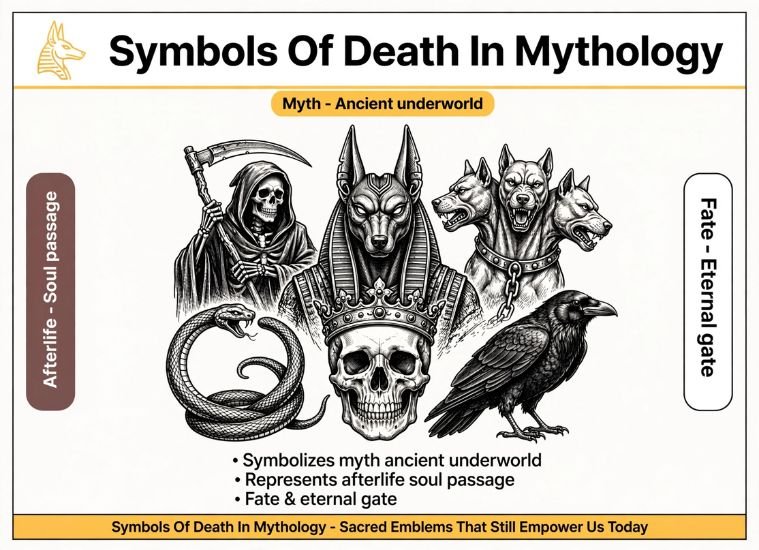
Different cultures have created stories and figures connected with death, the afterlife, judgment, transformation, and the boundary between life and death. These symbols belong to specific traditions, so their meanings should be understood within their cultural context.
| Name | Meaning | Description |
| Anubis | Funerary tradition | The ancient Egyptian god Anubis is strongly associated with mummification, funerary practices, and the dead. |
| Osiris | Afterlife | Osiris is an ancient Egyptian deity associated with death, resurrection, and the afterlife. |
| Hades | Underworld | In Greek mythology, Hades is the ruler of the underworld and the realm of the dead. |
| Persephone | Seasonal change | Persephone is connected with the Greek myth explaining her time in the underworld and the changing seasons. |
| Charon | Passage | Charon is the figure in Greek mythology who carries souls across the river to the underworld. |
| Thanatos | Death | Thanatos is the personification of death in ancient Greek mythology. |
| Hel | Norse underworld | Hel is a figure in Norse mythology associated with a realm of the dead. |
| Yama | Death and judgment | In Hindu and Buddhist traditions, Yama is associated with death and, in some traditions, judgment. |
| Mictlantecuhtli | Aztec death tradition | Mictlantecuhtli is an Aztec deity associated with the dead and the underworld. |
| Santa Muerte | Death and devotion | Santa Muerte is a folk saint figure venerated in parts of Mexico and elsewhere, with associations involving death and protection. |
| Morrígan | War and fate | The Morrígan is a figure from Irish mythology associated with warfare, fate, and sovereignty. |
| Banshee | Death omen | In Irish folklore, the banshee is known for a mournful cry associated with the death of a person. |
| Grim Reaper | Personified death | The Grim Reaper is a later European cultural image of death commonly shown as a cloaked figure carrying a scythe. |
| Fate Sisters | Destiny | The Greek Moirai control the thread of human destiny in mythology and are sometimes linked with the limits of life. |
| Valkyrie | Battle and afterlife | Valkyries are figures in Norse mythology associated with choosing warriors who die in battle. |
| Ereshkigal | Underworld | Ereshkigal is a Mesopotamian goddess associated with the underworld. |
| Nergal | War and death | Nergal is a Mesopotamian deity associated with war, plague, and the underworld. |
| Ankou | Death figure | Ankou is a figure in Breton folklore associated with death and the collection of souls. |
| Psychopomp | Soul’s passage | A psychopomp is a supernatural guide believed in various traditions to lead the dead to the afterlife. |
| Death Mask | Mortal identity | Death masks preserve a person’s facial features after death and have been used historically for remembrance and artistic purposes. |
Explore the magical stories and visual details connected to Harry Potter symbols elements and learn how these recognizable designs connect with the characters, stories, and wizarding world.
Symbols Of Death In Art And Literature
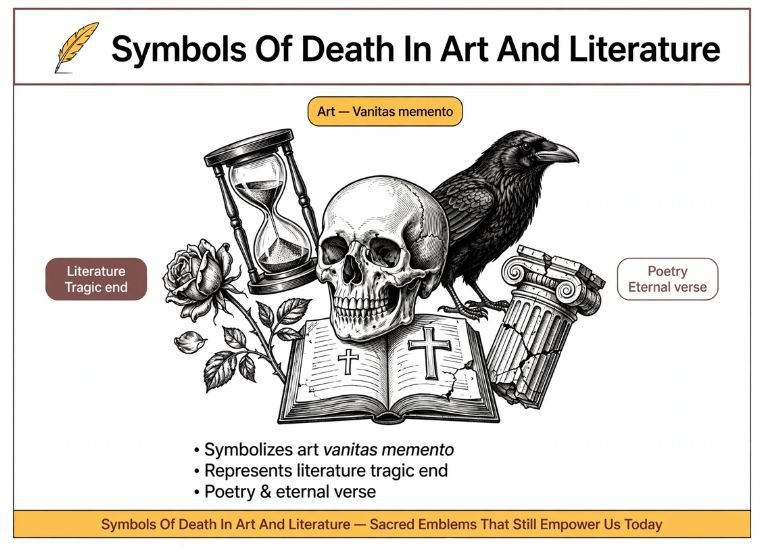
Death has been a major theme in art and literature for centuries. Artists and writers often use simple objects, animals, and scenes to communicate mortality, grief, loss, and the passing of time. These symbols can make serious ideas easier to understand without showing death directly.
| Name | Meaning | Description |
| Memento Mori | Reminder of death | This Latin phrase means a reminder of mortality and appears in art that encourages people to remember that life is temporary. |
| Vanitas | Life’s temporary nature | Vanitas art uses objects such as skulls, clocks, and fading flowers to show that wealth and worldly achievements do not last forever. |
| Death Mask | Mortality | A death mask preserves facial features after death and has been used as a memorial object and artistic reference. |
| Skull And Crown | Power and mortality | Combining a crown with a skull can show that death comes regardless of social rank or power. |
| Skull And Roses | Beauty and death | The contrast between a skull and roses can represent the relationship between beauty, life, and mortality. |
| Broken Column | Interrupted life | A broken column can represent a life that ended before its expected completion. |
| Snuffed Candle | Life’s end | A candle that has been extinguished can represent the ending of a person’s life. |
| Clock | Passing time | A clock can represent the steady movement of time and the limited nature of human life. |
| Empty Hourglass | Time completed | An empty hourglass can suggest that a period of life has reached its end. |
| Fading Portrait | Lost memory | A fading image can represent the gradual passing of memory after someone’s death. |
| Wilted Garland | Loss | A withered garland can represent something once beautiful that has come to an end. |
| Closed Book | Final chapter | A closed book can represent the completion of a life story or the end of a personal journey. |
| Broken Quill | End of a story | A broken writing instrument can represent a life or story that has been brought to an end. |
| Empty Frame | Absence | An empty frame can suggest that someone is no longer present while their memory remains. |
| Fallen Crown | Loss of power | A fallen crown can show that authority and status cannot protect a person from mortality. |
| Dark Mirror | Mortality | A dark or empty mirror can be used artistically to suggest absence, reflection, and the end of life. |
| Withered Wreath | Mourning | A fading wreath can represent grief and the passing of time after a death. |
| Broken Statue | Human fragility | A damaged statue can symbolize the fragile nature of life, memory, and physical existence. |
| Last Page | Completion | The final page of a book can represent the closing chapter of a person’s life. |
| Faded Photograph | Memory | An old photograph can represent someone who has died and the memories that remain. |
Explore the cultural traditions and protective ideas connected to Protection Symbols beliefs and learn how these meaningful designs have represented safety, security, and protection across different cultures.
Symbols Of Death In Different Cultures
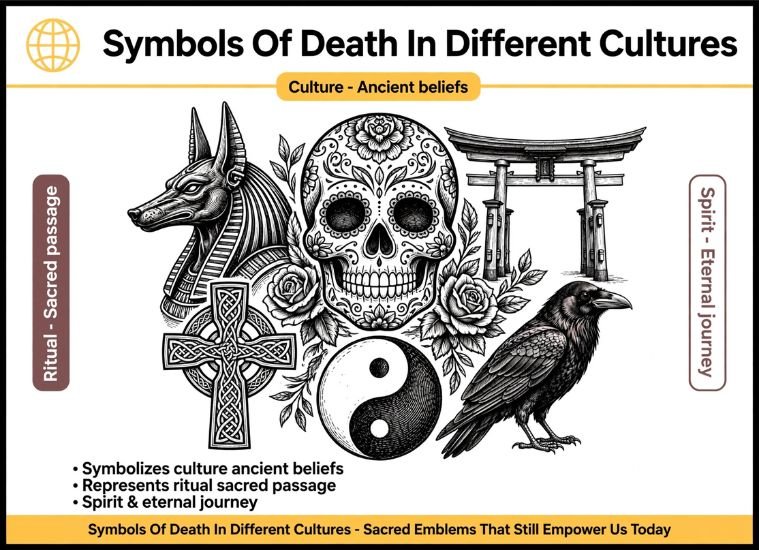
Death symbols do not have the same meaning everywhere. A color, animal, flower, or object may represent mourning in one culture and celebration or good fortune in another. Understanding the cultural setting is important when interpreting these symbols.
| Name | Meaning | Description |
| White Mourning Clothing | Grief | White is used for mourning in several Asian traditions and can have meanings that differ from Western funeral customs. |
| Black Mourning Clothing | Loss | Black has a long association with mourning in many Western societies. |
| Chrysanthemum | Memorial remembrance | Chrysanthemums are strongly connected with funerals and remembrance in several countries, including Japan and parts of Europe. |
| Marigold | Remembrance | Marigolds are important in Día de los Muertos traditions in Mexico, where they are associated with welcoming and remembering the dead. |
| Obon Lantern | Ancestral remembrance | Lanterns are used during Obon traditions in Japan, which honor and remember ancestors. |
| Día De Los Muertos Skull | Celebration of remembrance | Decorative skulls known as calaveras are important visual elements of Día de los Muertos and can represent remembrance rather than simple fear of death. |
| Qingming Offerings | Ancestral respect | Offerings and grave visits during Qingming reflect respect and remembrance for deceased family members. |
| Tomb Lantern | Memorial light | Lanterns may be used in some traditions to create a symbolic connection between remembrance and light. |
| Ancestor Tablet | Family memory | In several East Asian traditions, ancestral tablets can serve as objects of remembrance for deceased family members. |
| Memorial Incense | Respect | Incense is used in various religious and cultural practices connected with honoring the dead. |
| Funeral Drum | Ceremony | Drums can form part of funeral ceremonies in different cultures and may mark important moments in communal rituals. |
| Ancestor Shrine | Remembrance | A shrine can provide a dedicated place for families to honor deceased relatives. |
| Memorial Photograph | Family memory | Photographs can help preserve the identity and memory of someone who has died. |
| Funeral White Flower | Respect | White flowers are used in many cultures to express sympathy, peace, or respect. |
| Burial Mound | Ancestral memory | Burial mounds are found in many parts of the world and can mark ancient places of burial and remembrance. |
| Memorial Stone | Lasting tribute | Stones and monuments can preserve names, dates, and memories for future generations. |
| Ancestor Altar | Family connection | An ancestor altar provides a place for remembrance and family rituals in certain cultural traditions. |
| Funeral Procession | Farewell | A funeral procession represents the communal act of accompanying someone to their final resting place. |
| Memorial Prayer | Spiritual remembrance | Prayer may be used to honor the deceased and comfort those who are grieving. |
| Burial Cloth | Funeral tradition | Burial cloths have been used in different cultures as part of preparing the deceased for burial. |
Explore the seasonal customs and cultural meanings connected to Christmas symbols heritage and learn how these familiar designs have become meaningful parts of holiday celebrations.
Symbols Of Death And The Afterlife
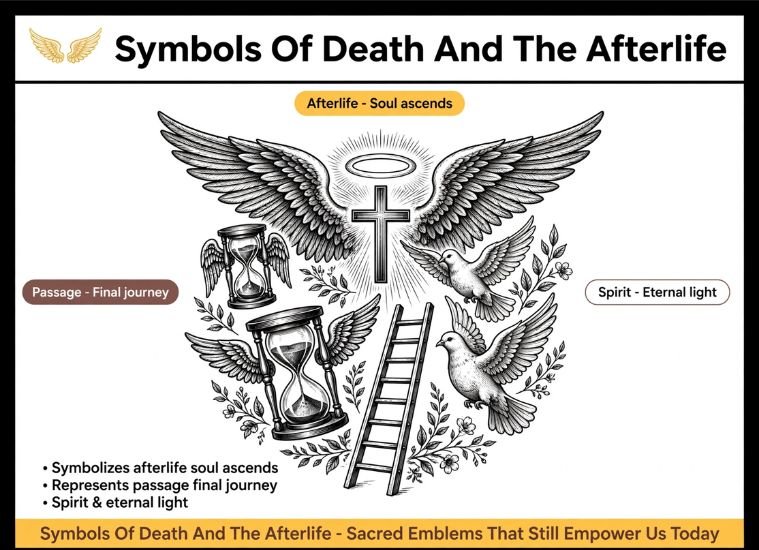
Many religious and mythological traditions use symbols to express ideas about what may happen after death. These symbols can represent judgment, spiritual passage, peace, resurrection, or another existence.
| Name | Meaning | Description |
| Angel Wings | Spiritual passage | Wings are often used in religious and memorial art to represent angels, spiritual beings, or movement toward the afterlife. |
| Heavenly Gate | Entrance | A gate can represent entry into a spiritual place or the transition from earthly life. |
| White Light | Peace | Light is commonly used in religious and spiritual imagery to represent peace, hope, or spiritual presence. |
| Soul Bird | Spiritual journey | Birds are sometimes used symbolically to represent the soul leaving the physical world. |
| Stairway To Heaven | Ascension | A staircase can represent movement from earthly life toward a spiritual destination. |
| River Crossing | Transition | Crossing a river appears in several myths and can represent movement between different states of existence. |
| Golden Gate | Afterlife | A golden gate can be used in religious-inspired artwork as an image of entrance into a heavenly place. |
| White Dove | Peace | The dove has strong religious associations with peace and the spirit and is also used in memorial imagery. |
| Angel Statue | Protection | Angel statues are common in cemeteries and memorials and may represent spiritual protection or comfort. |
| Halo | Holiness | A halo is a traditional artistic sign of holiness and is often shown around the heads of saints and sacred figures. |
| Resurrection Cross | New life | In Christian art, the cross can represent both death and resurrection, making it a symbol of hope as well as loss. |
| Empty Tomb | Resurrection | The empty tomb is an important Christian symbol associated with the resurrection of Jesus. |
| Butterfly | Transformation | Butterflies are often used as modern symbols of transformation and can represent a person’s transition after death. |
| Open Door | Passage | An open door can represent movement from one state of existence to another. |
| Bridge | Transition | A bridge can symbolize passage, connection, and movement between two places or stages. |
| Rising Light | Hope | Light rising from darkness can represent hope and spiritual continuation. |
| Star Path | Journey | A path of stars can be used in symbolic art to suggest a journey beyond earthly life. |
| Celestial Crown | Spiritual reward | A crown in religious artwork may represent honor, holiness, or spiritual reward. |
| Peaceful Garden | Rest | A garden can represent peace, rest, and a calm place beyond suffering. |
| Eternal Flame | Continuity | An eternal flame is often used to represent remembrance that continues after a person’s death. |
Explore the powerful ideas and cultural associations connected to Symbols of Strength meanings and learn how these enduring designs can represent courage, resilience, determination, and inner power.
Symbols Of Death And Remembrance
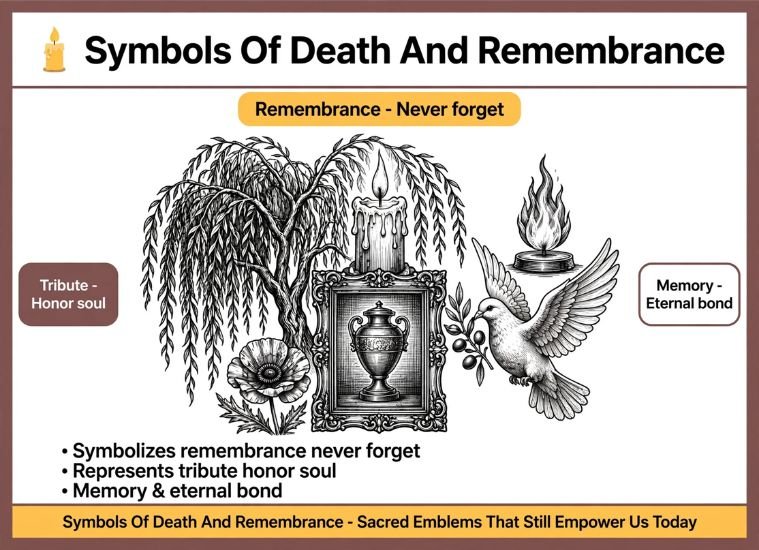
Remembrance symbols help people keep someone’s memory present after death. They are often used in funerals, memorial services, cemeteries, jewelry, tattoos, and personal keepsakes.
| Name | Meaning | Description |
| Memorial Candle Flame | Memory | A burning candle can represent the continued memory of someone who has died. |
| Remembrance Wreath | Honor | A wreath can be placed at a grave or memorial as a sign of respect. |
| Engraved Name | Identity | A person’s name on a memorial keeps their identity connected with a physical place or object. |
| Memorial Plaque | Tribute | A plaque can preserve a person’s name and important information for others to remember. |
| Memory Bracelet | Personal tribute | A bracelet can carry a name, date, or symbol connected with a loved one. |
| Memorial Necklace | Keepsake | A necklace may contain an engraved message, photograph, or small keepsake. |
| Photo Locket | Personal memory | A locket can hold a photograph and provide a private reminder of someone who has died. |
| Memorial Tree | Continuing life | Planting a tree in memory of someone can connect remembrance with ongoing natural growth. |
| Memory Garden | Reflection | A garden can provide a peaceful space where family members remember someone they have lost. |
| Remembrance Bench | Public tribute | A bench dedicated to someone creates a lasting place for reflection and memory. |
| Memorial Stone | Permanence | Stone can represent durability and the wish for a person’s memory to remain. |
| Name In Stone | Legacy | Engraving a name into stone creates a lasting physical record. |
| Memorial Quilt | Family memory | Quilts can combine photographs, clothing, or fabric connected with a loved one. |
| Memory Book | Shared history | A memory book can collect photographs, stories, and messages from family and friends. |
| Memorial Portrait | Presence | A portrait keeps a visual representation of a person within the home or memorial space. |
| Keepsake Box | Memories | A box can safely hold personal objects that remind a family of someone who has died. |
| Memorial Garden Stone | Tribute | A personalized garden stone can carry a name, date, or short message in someone’s memory. |
| Remembrance Ribbon | Respect | A ribbon can serve as a simple visible sign of remembrance and support. |
| Memorial Star | Memory | A star can be used in modern memorial designs as an image of a lasting presence. |
| Legacy Tree | Continuation | A tree can represent the way a person’s influence continues through family and future generations. |
FAQs About Symbols Of Death
Q1: What are symbols of death?
A1: Symbols of death are images, objects, or signs traditionally associated with mortality, loss, mourning, or the end of life.
Q2: What are some common symbols of death?
A2: Common symbols include the skull, hourglass, black rose, gravestone, crow, and scythe, although their meanings can vary across cultures.
Q3: What does the skull symbolize?
A3: The skull is often used as a reminder of mortality and the temporary nature of life. It can also represent danger or transformation in some contexts.
Q4: Why are symbols of death important?
A4: Symbols of death can help people express grief, remember loved ones, reflect on mortality, or represent themes of change and the cycle of life.
Q5: Can symbols of death have different meanings?
A5: Yes, their meanings can differ greatly depending on cultural traditions, religions, historical periods, and personal beliefs.
Q6: Where are symbols of death commonly used?
A6: They can appear in art, literature, memorials, religious traditions, films, tattoos, jewelry, and cultural ceremonies.